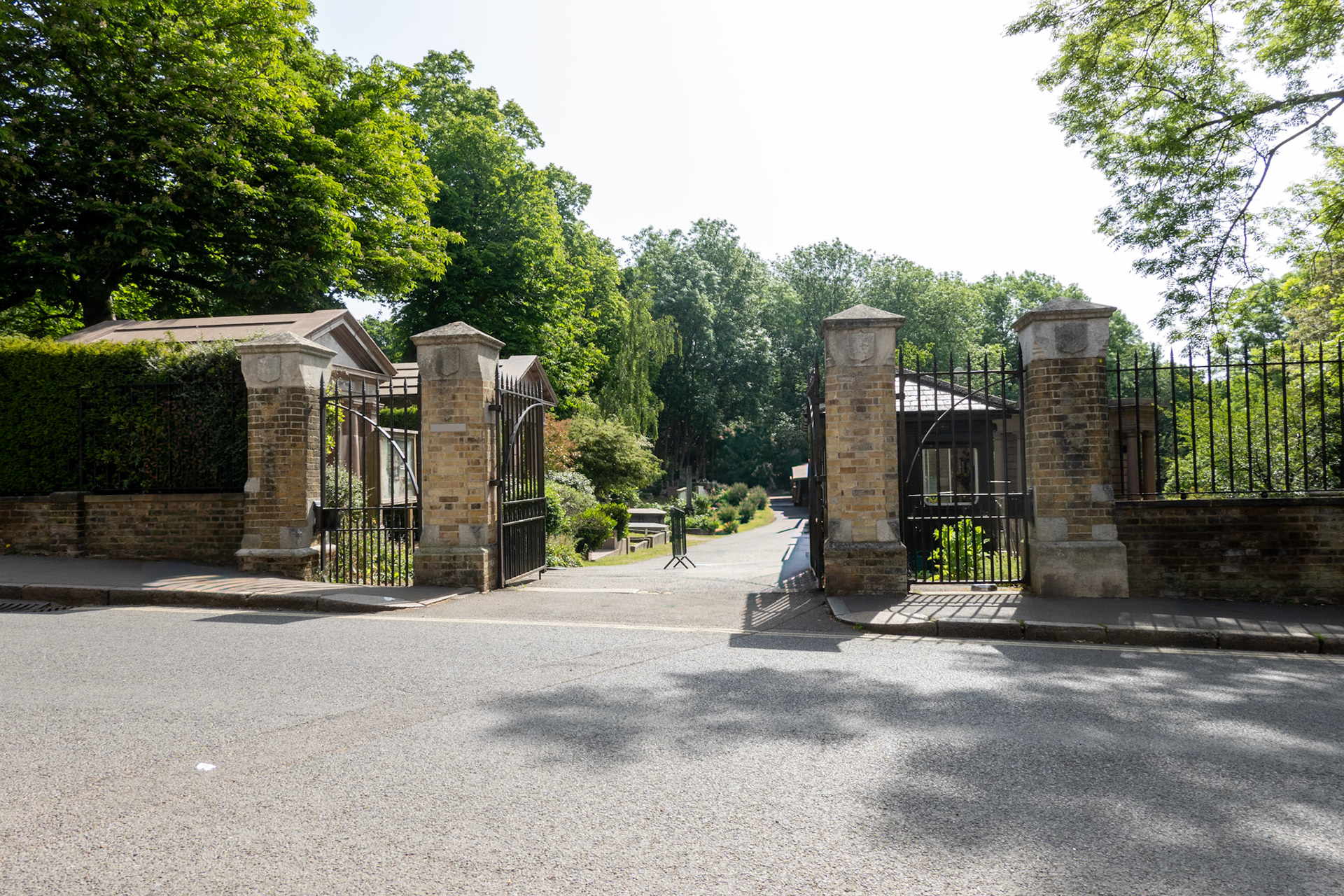
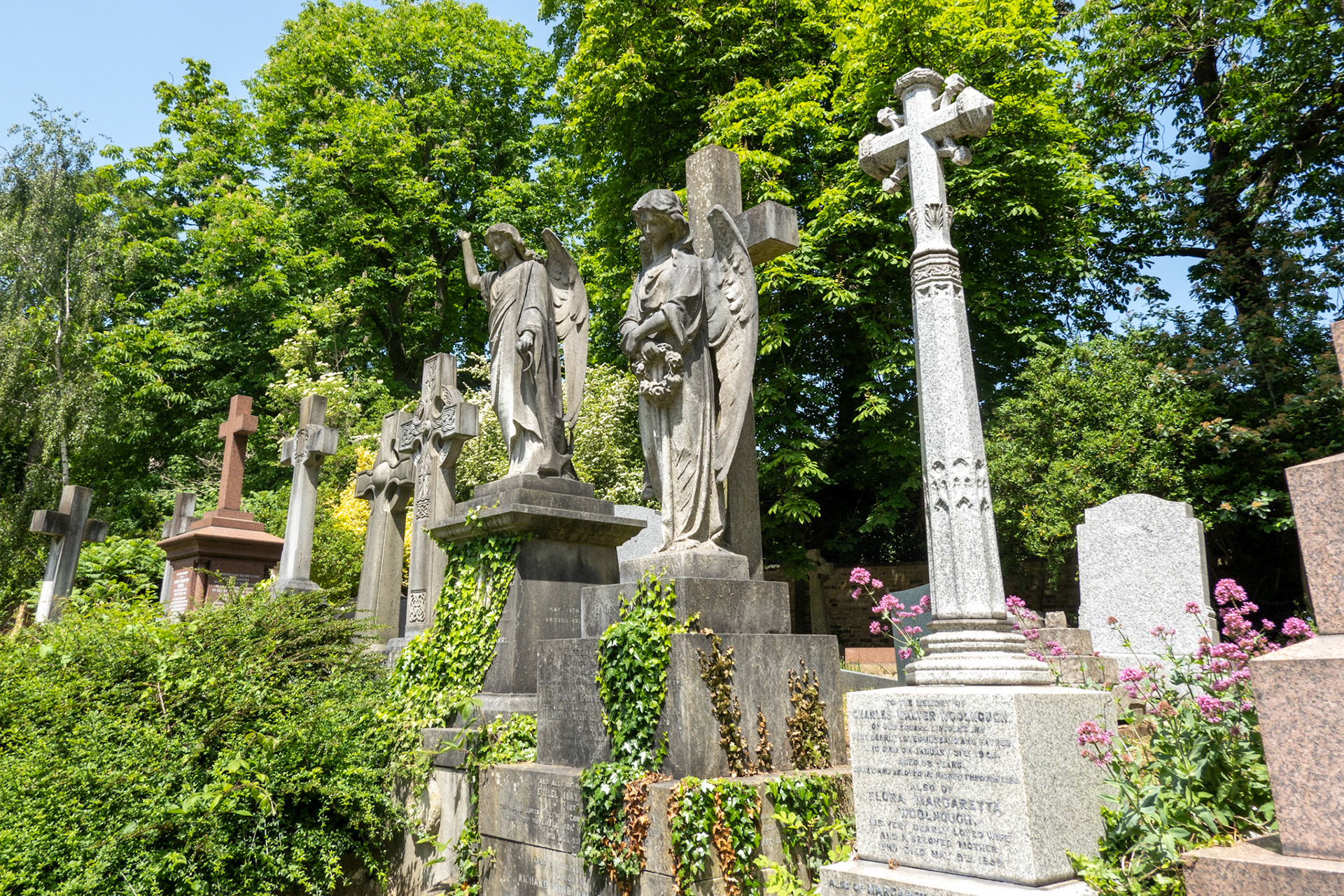
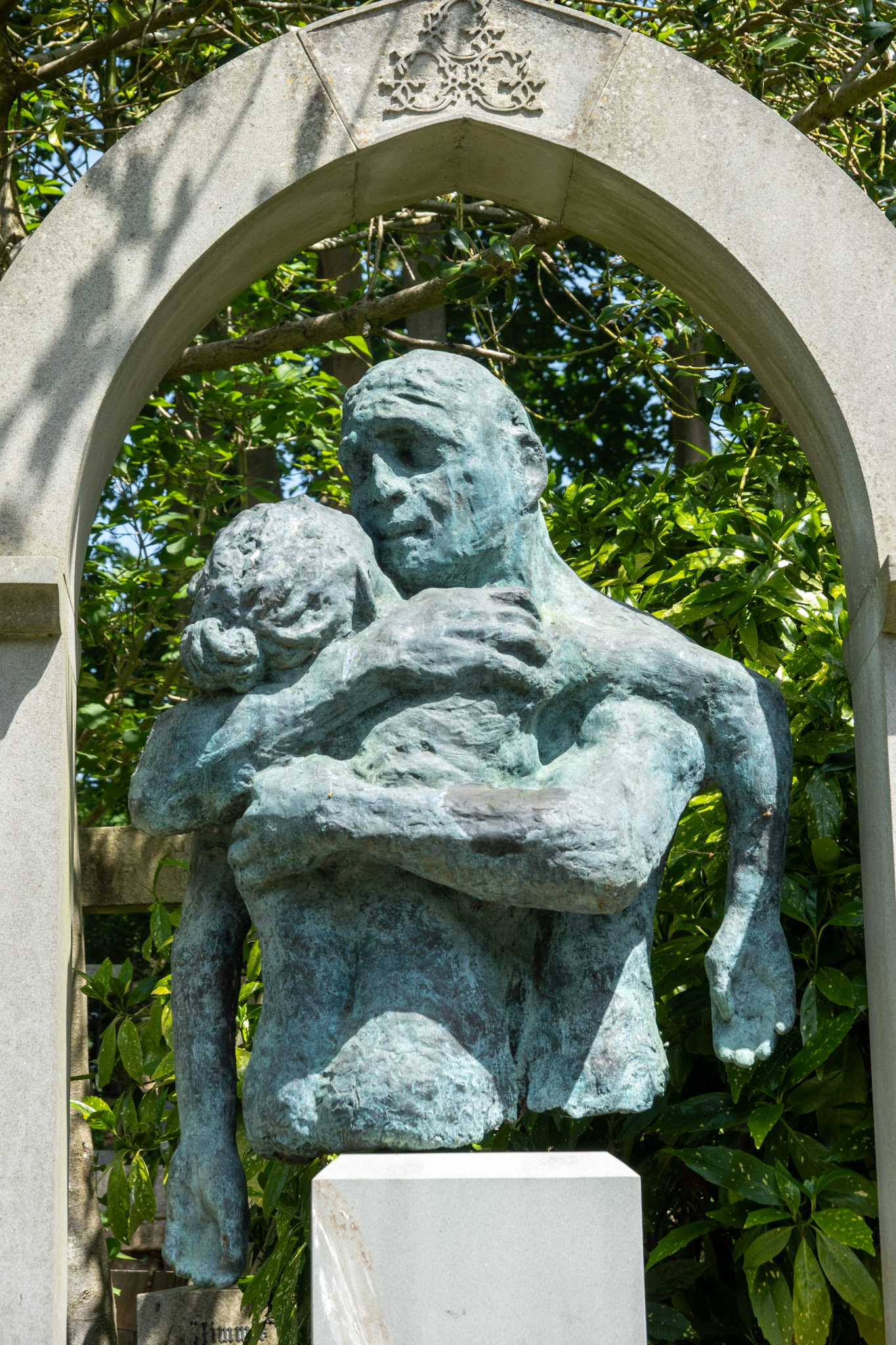
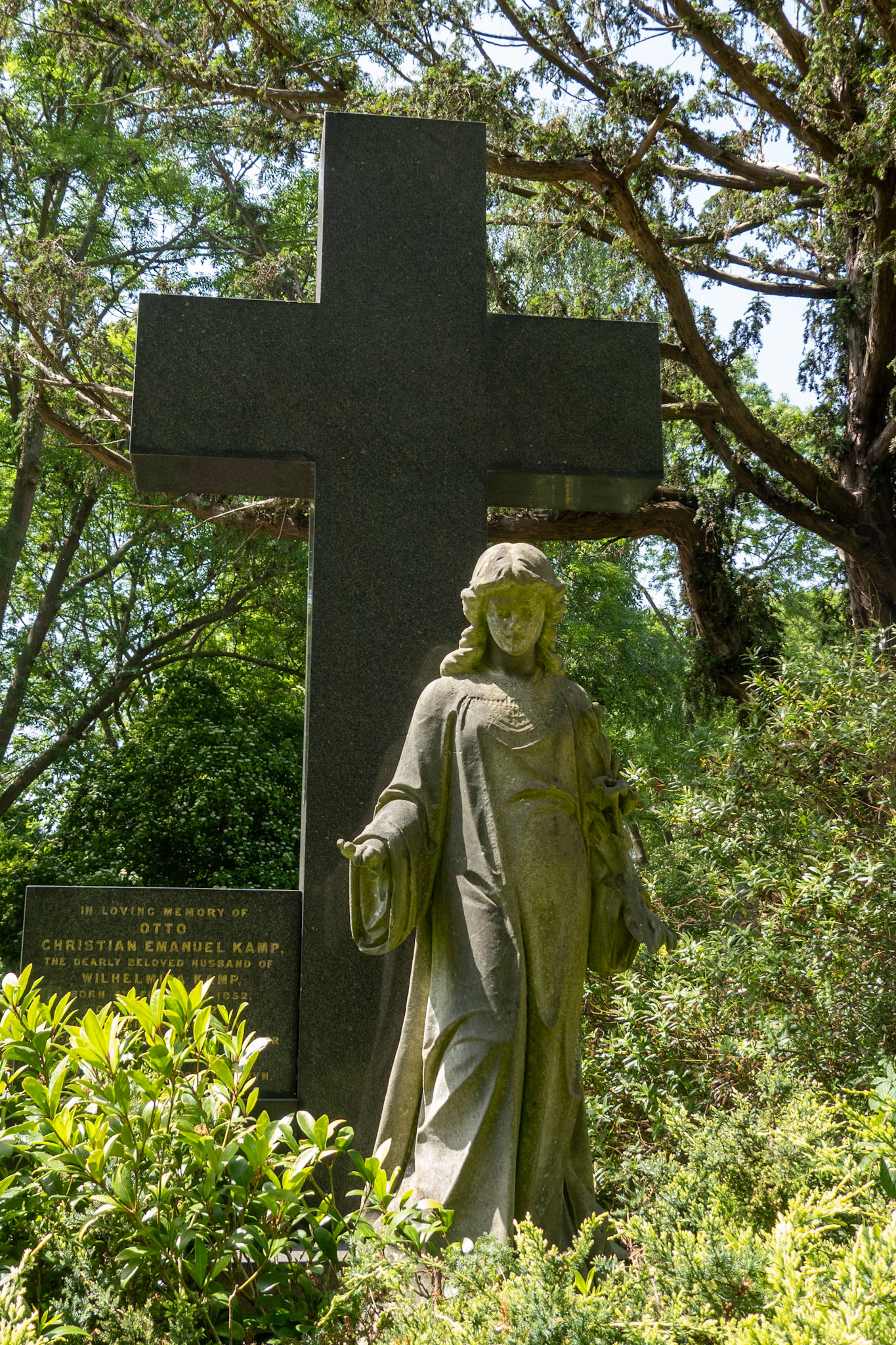
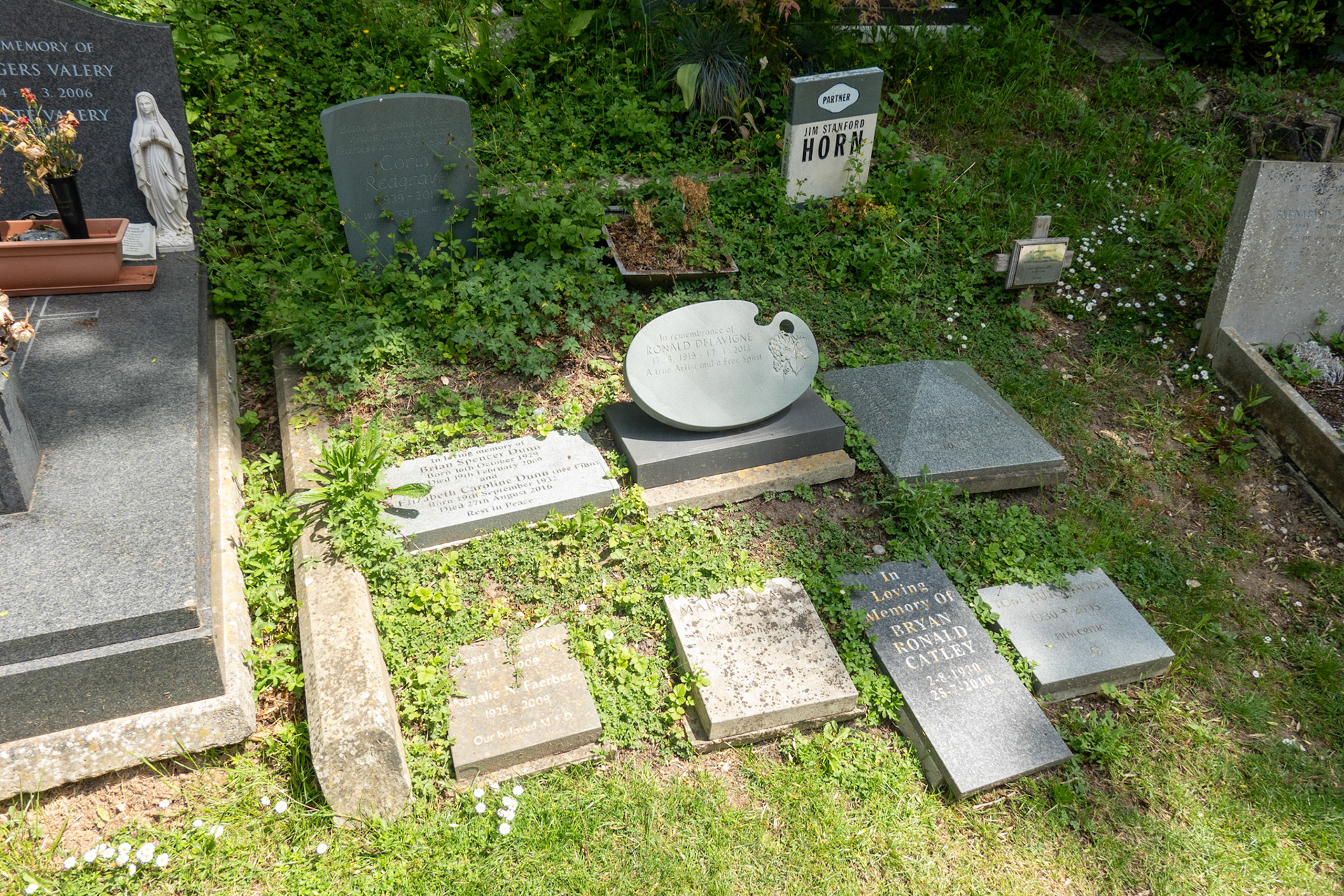
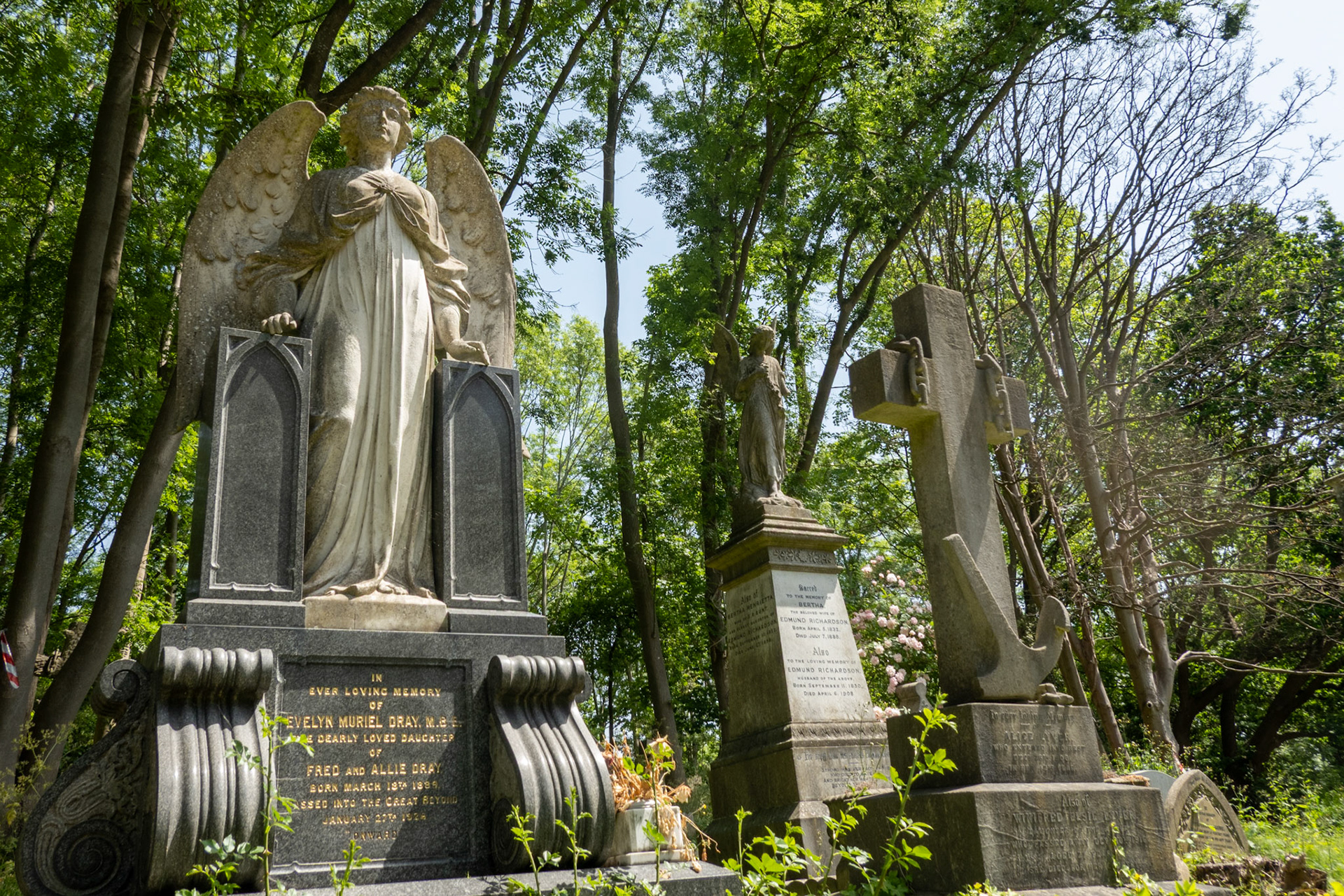
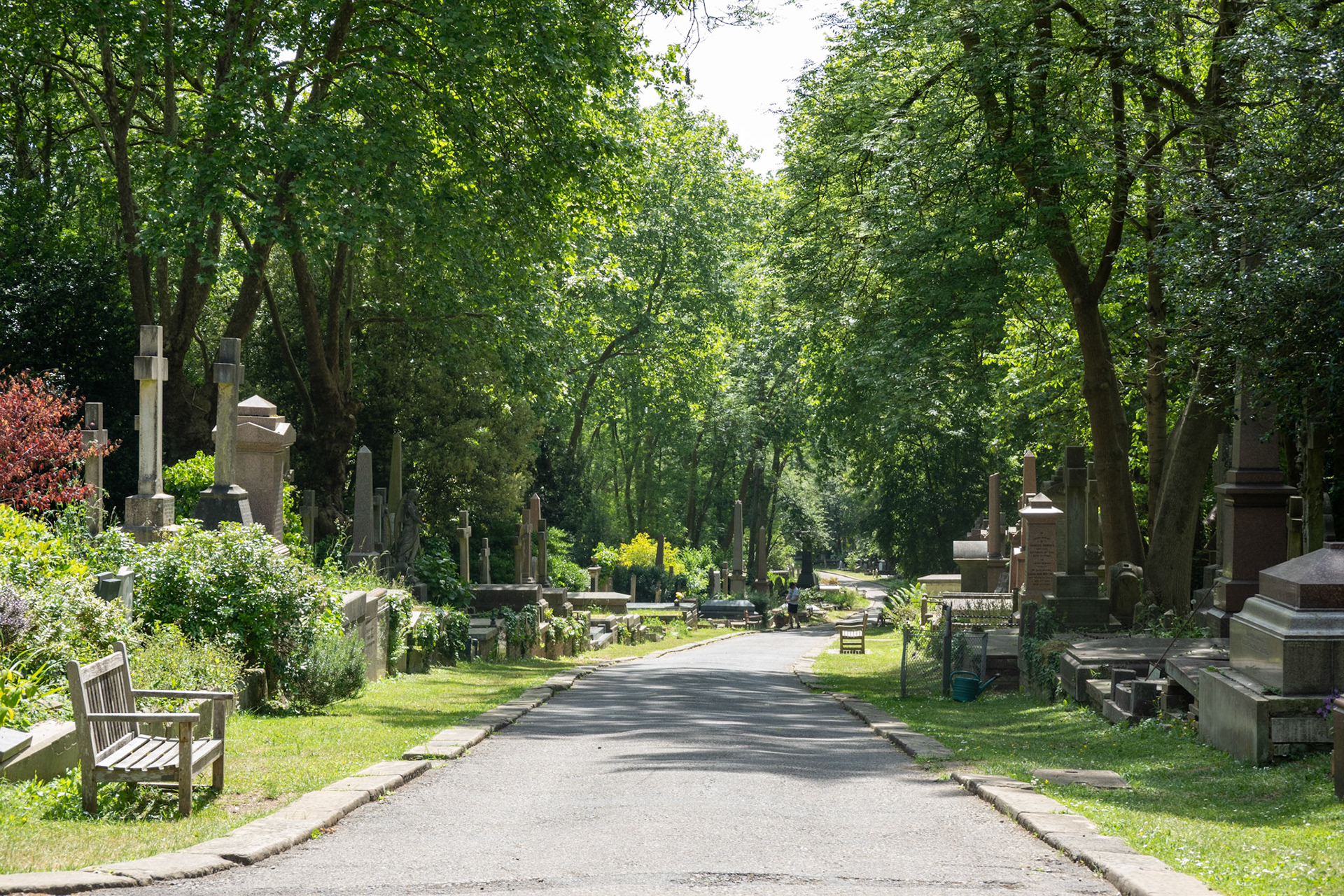
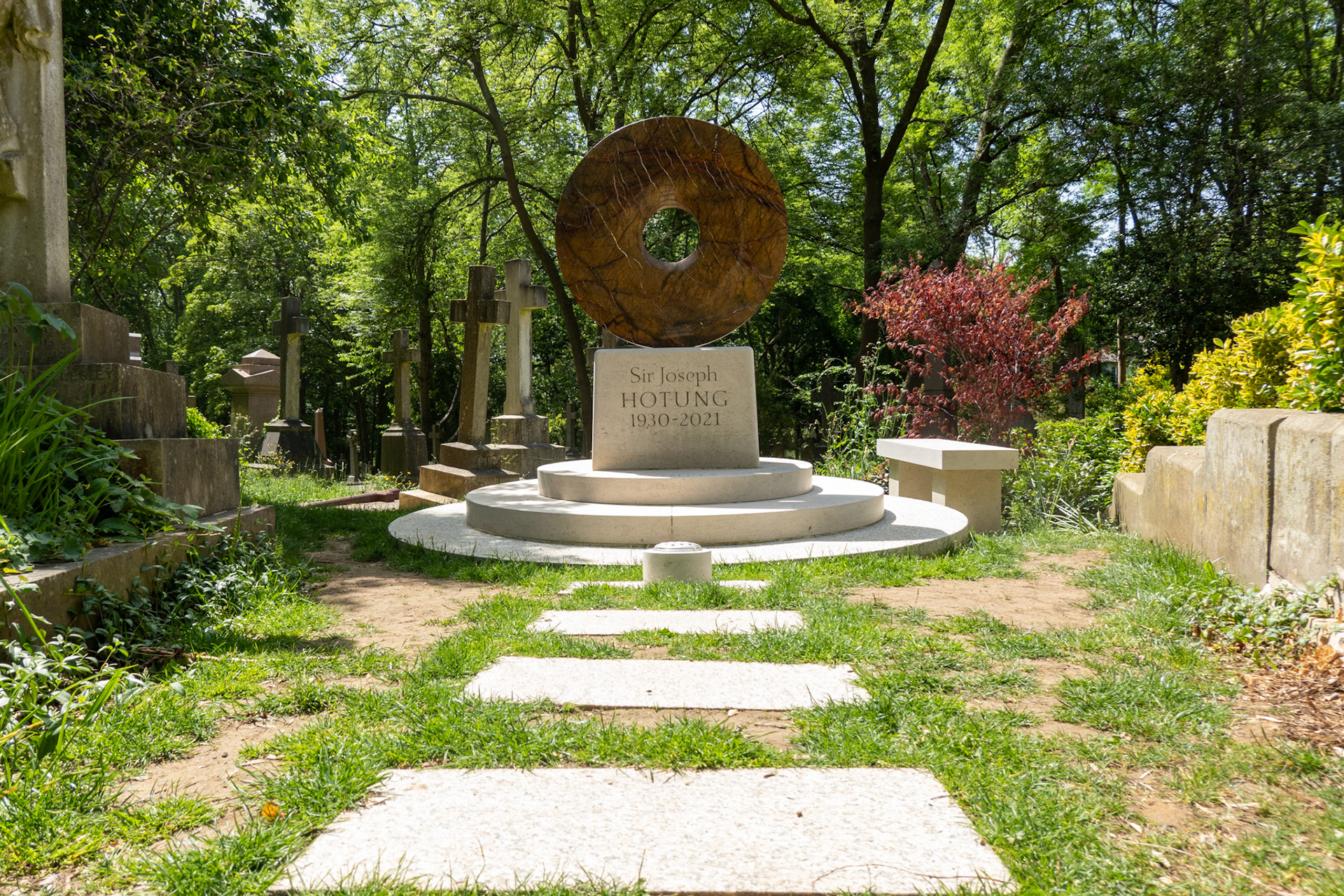
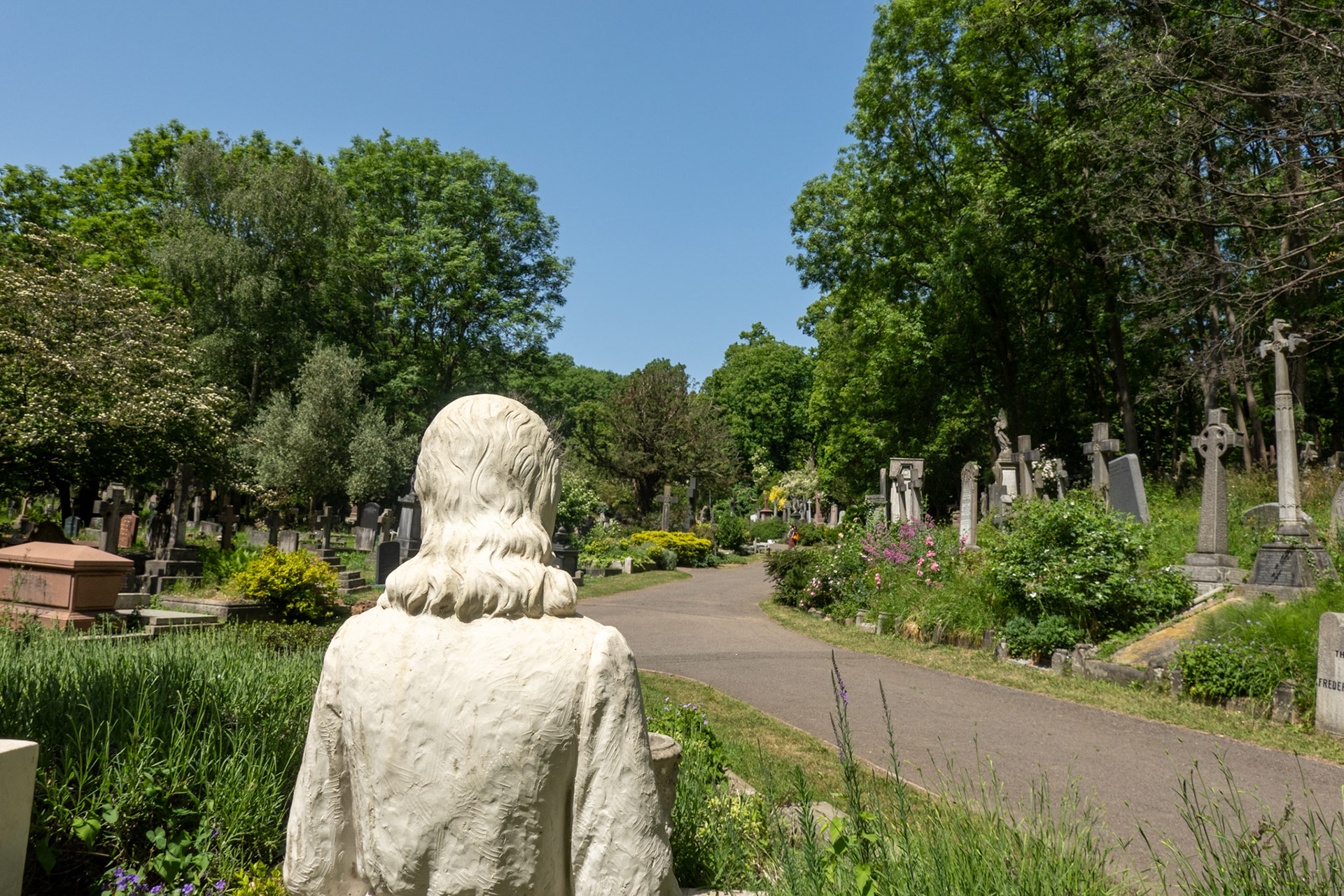
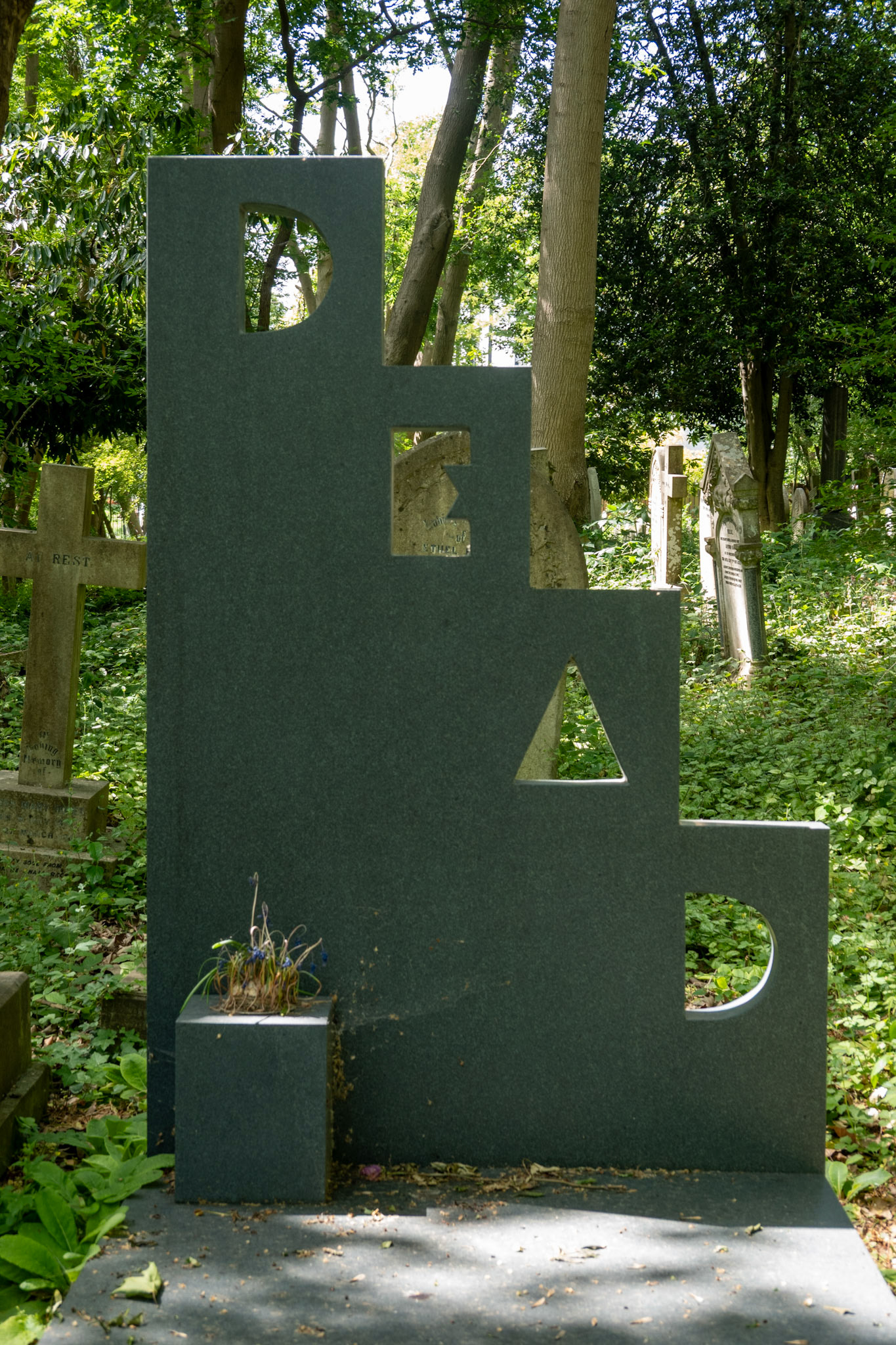
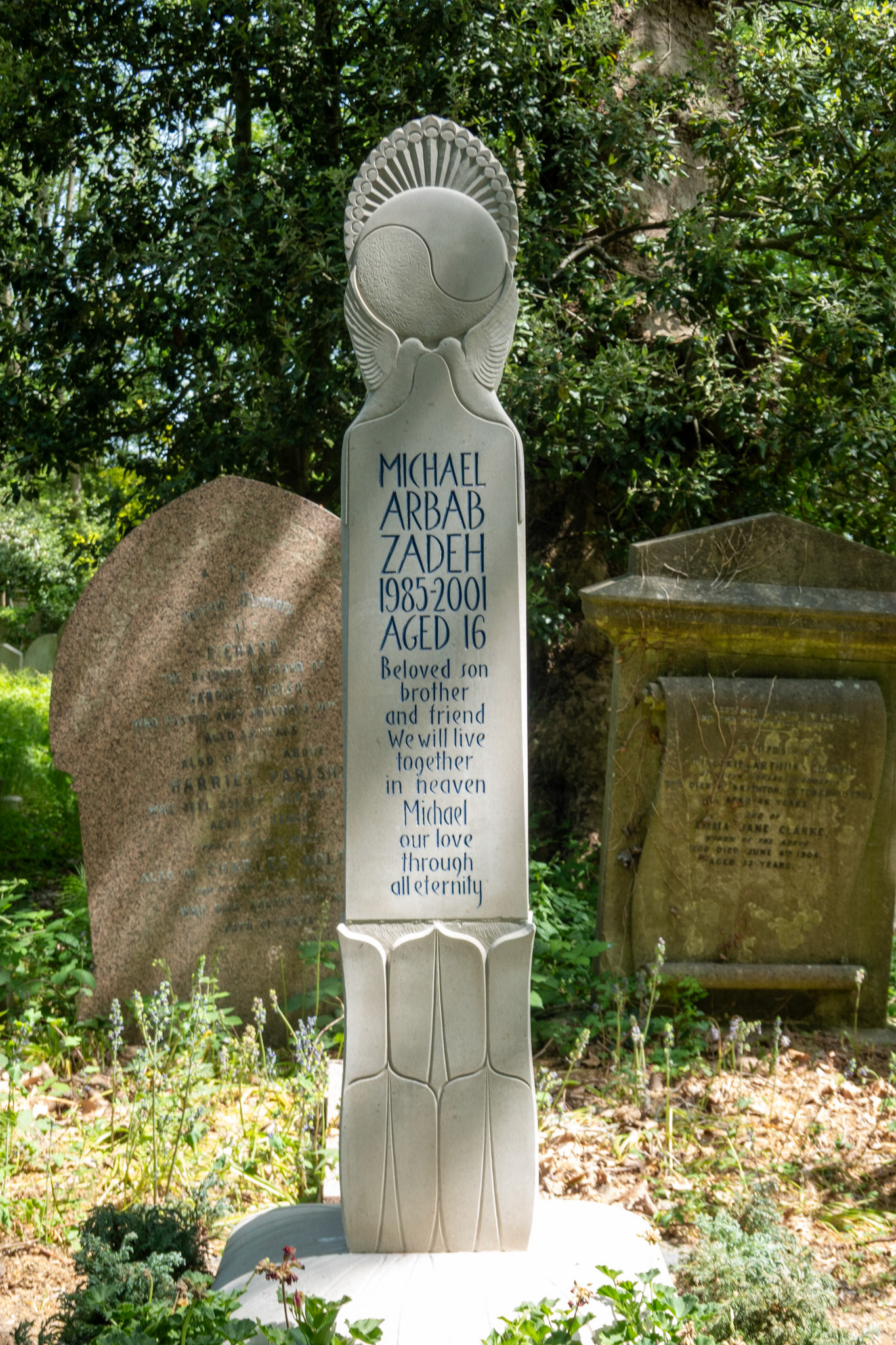
In 1854, an additional 19 acres (8 ha) southeast of the original site, beyond Swain’s Lane, were acquired to create the eastern extension; this section opened in 1860. Both sections of the cemetery are still used for burials today.
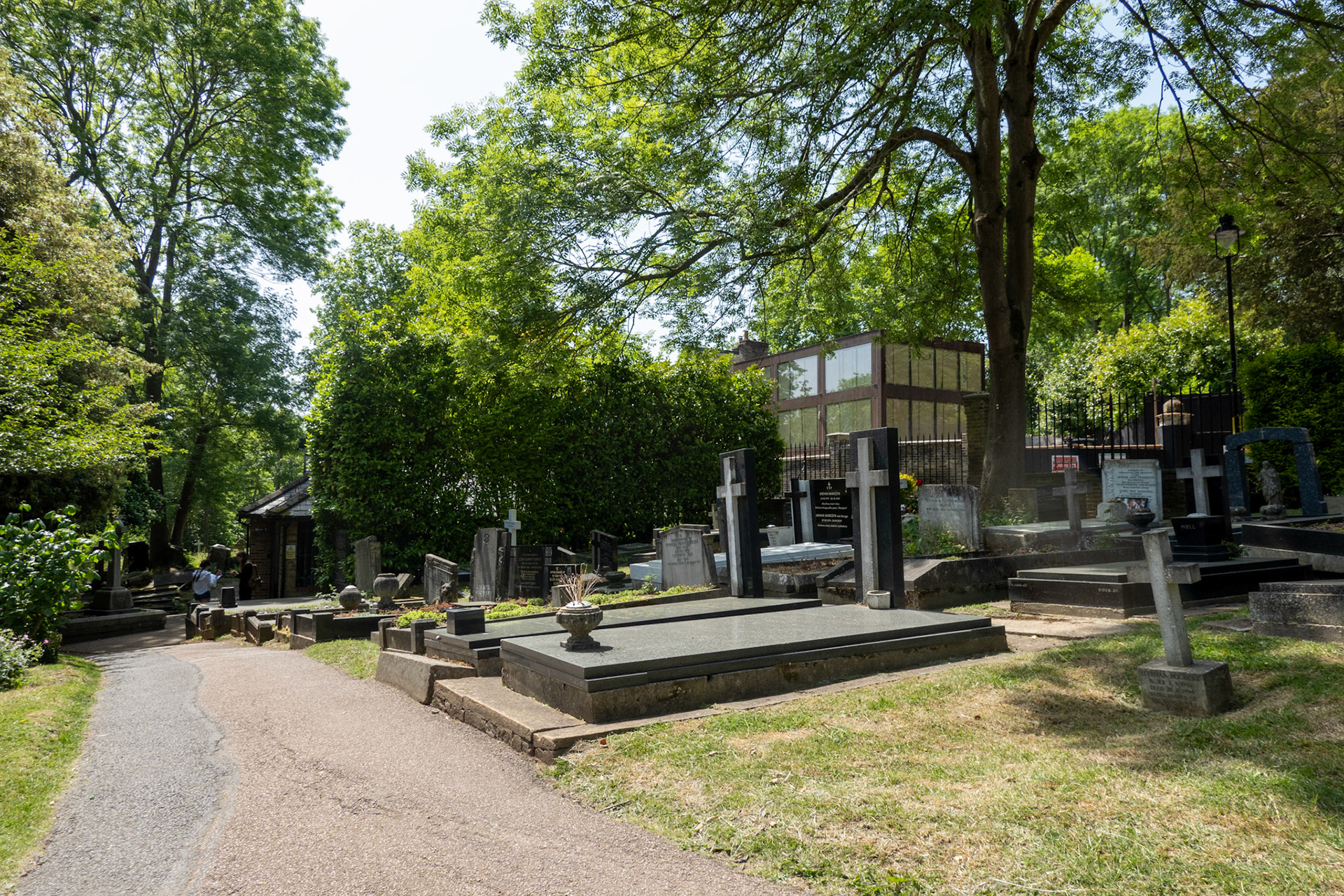
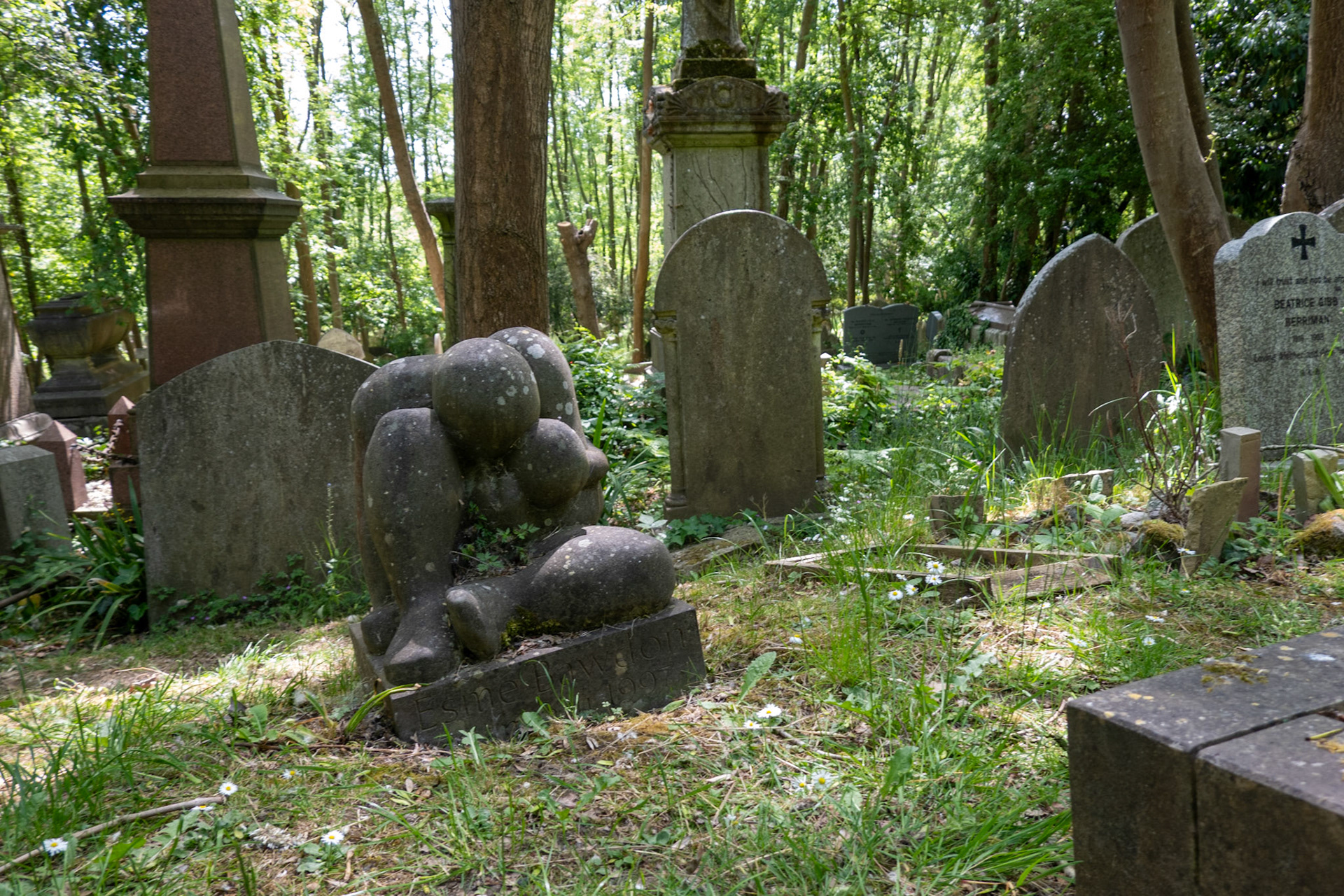
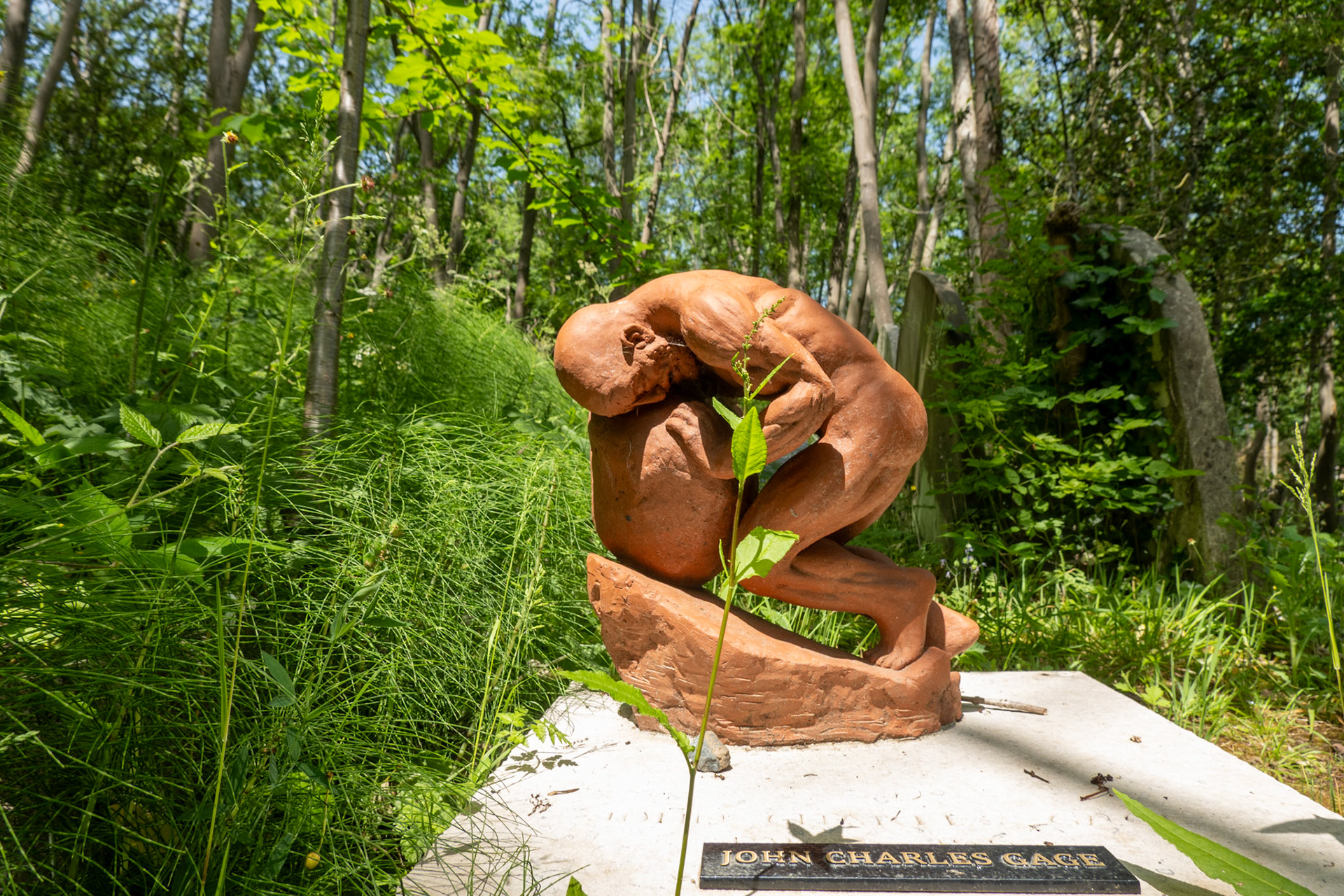
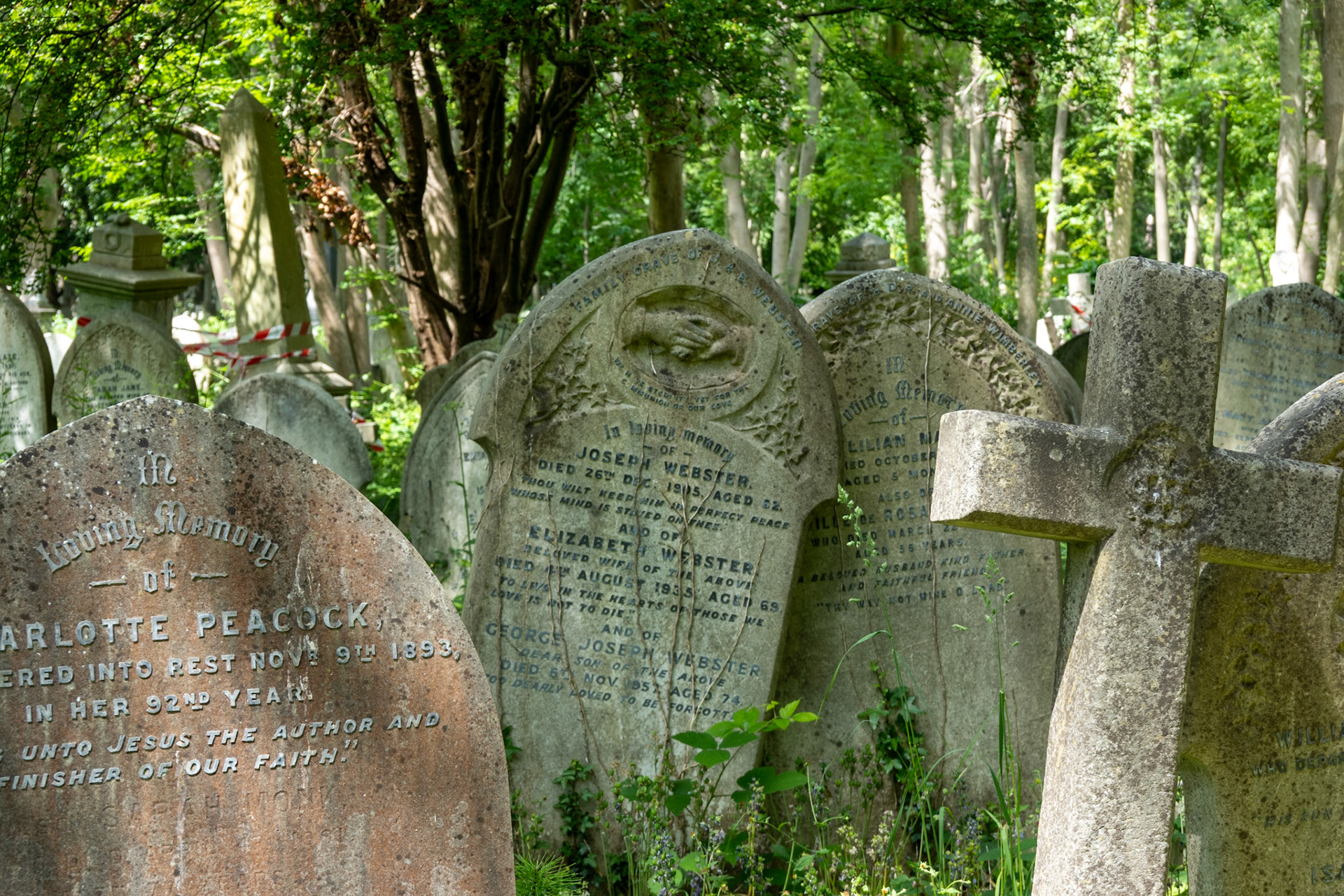
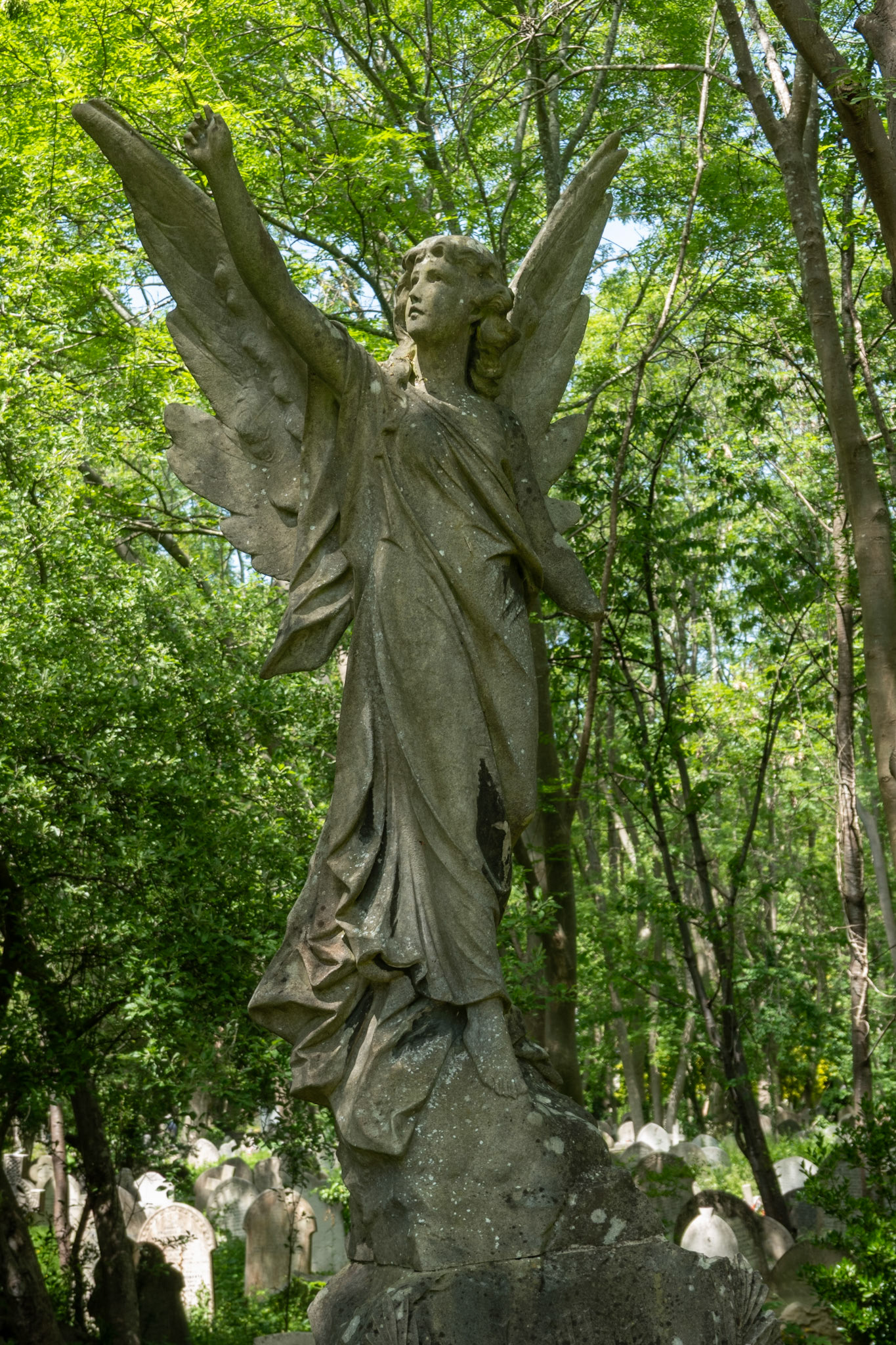
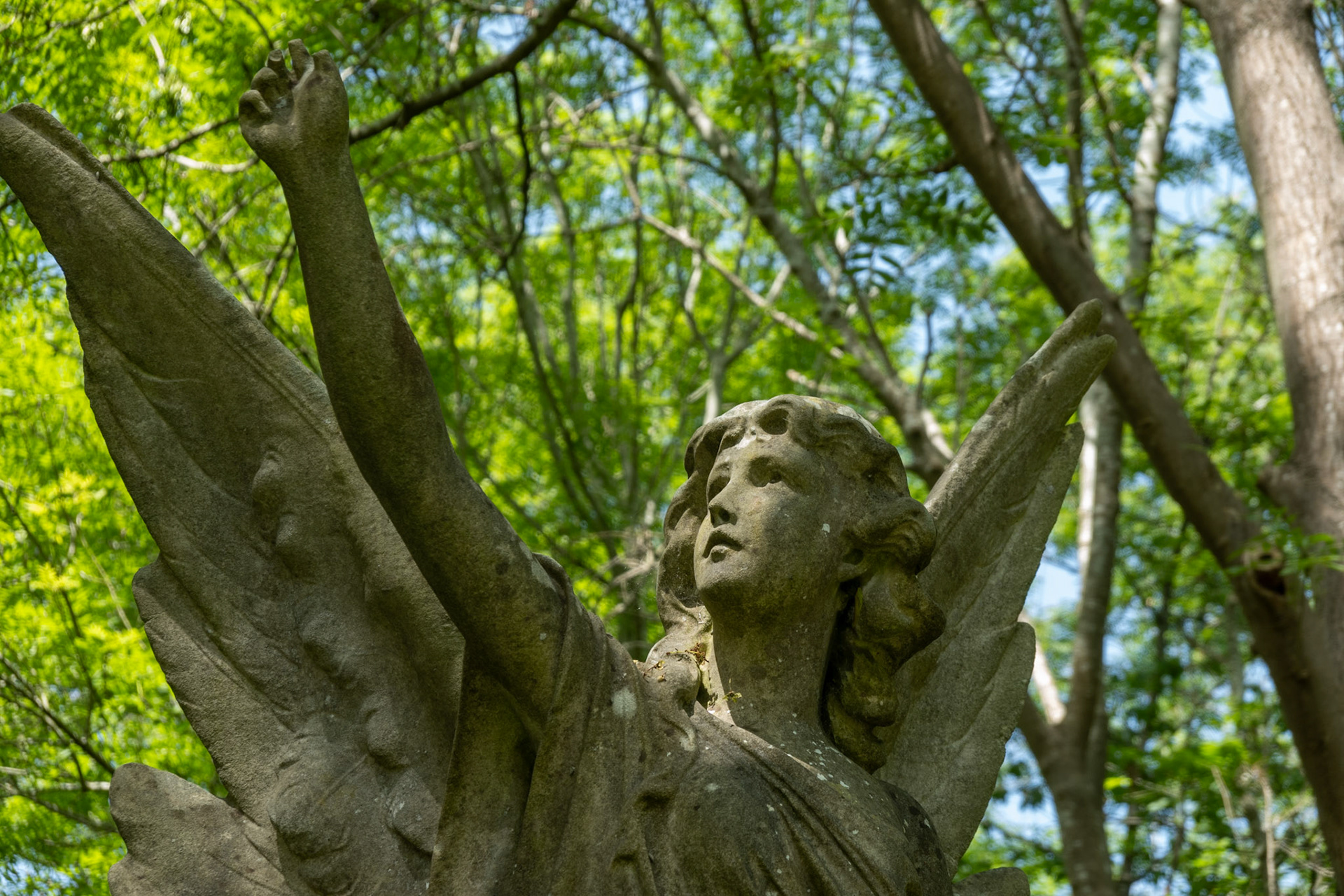
The cemetery grounds are rich in trees, shrubs, and wildflowers, most of which were planted and have grown without human intervention. The grounds serve as a refuge for birds and small mammals such as foxes.
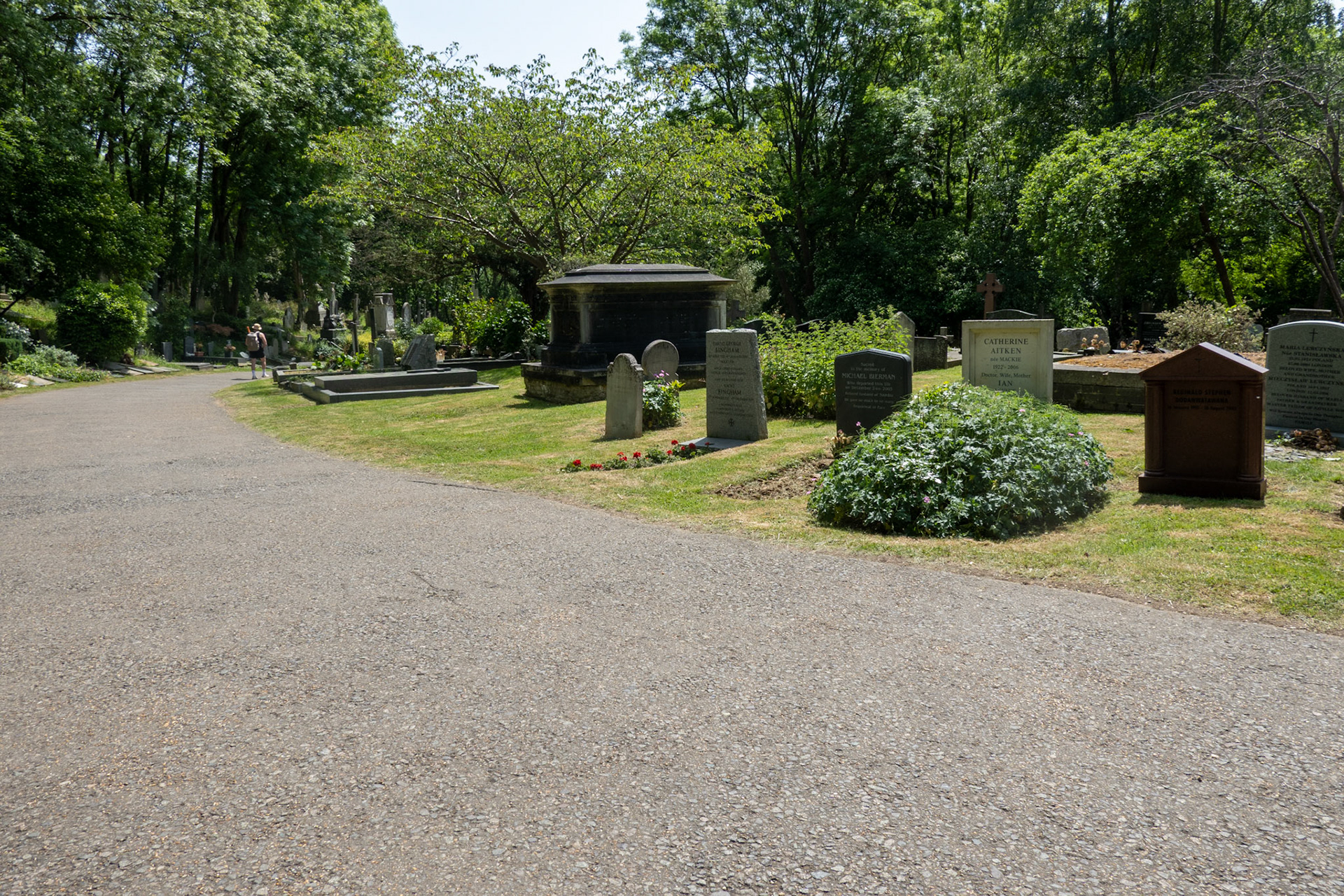
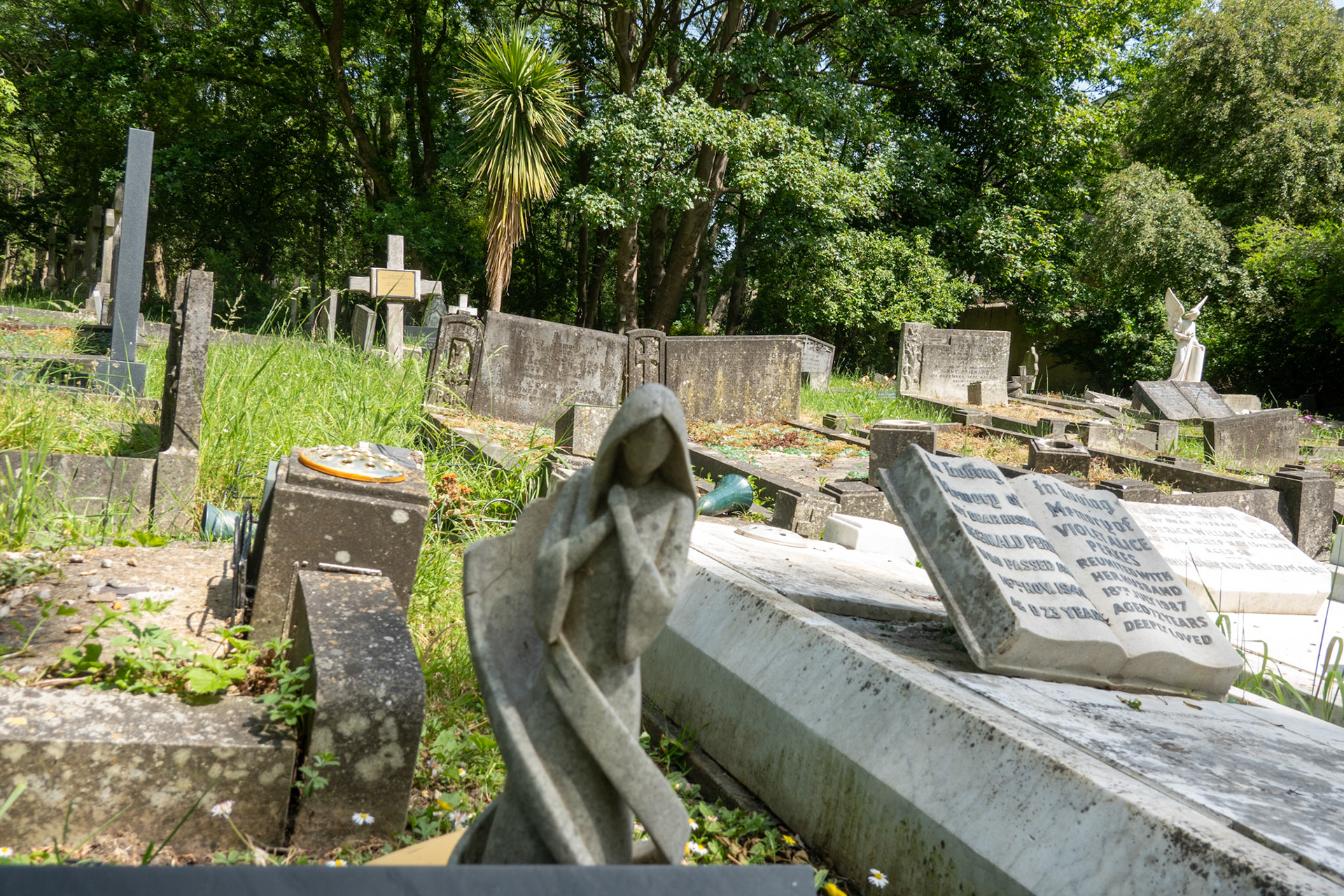
While I found the western section to be rather hilly and dark (even gloomy), the eastern section is brighter and more open, which creates a completely different atmosphere.
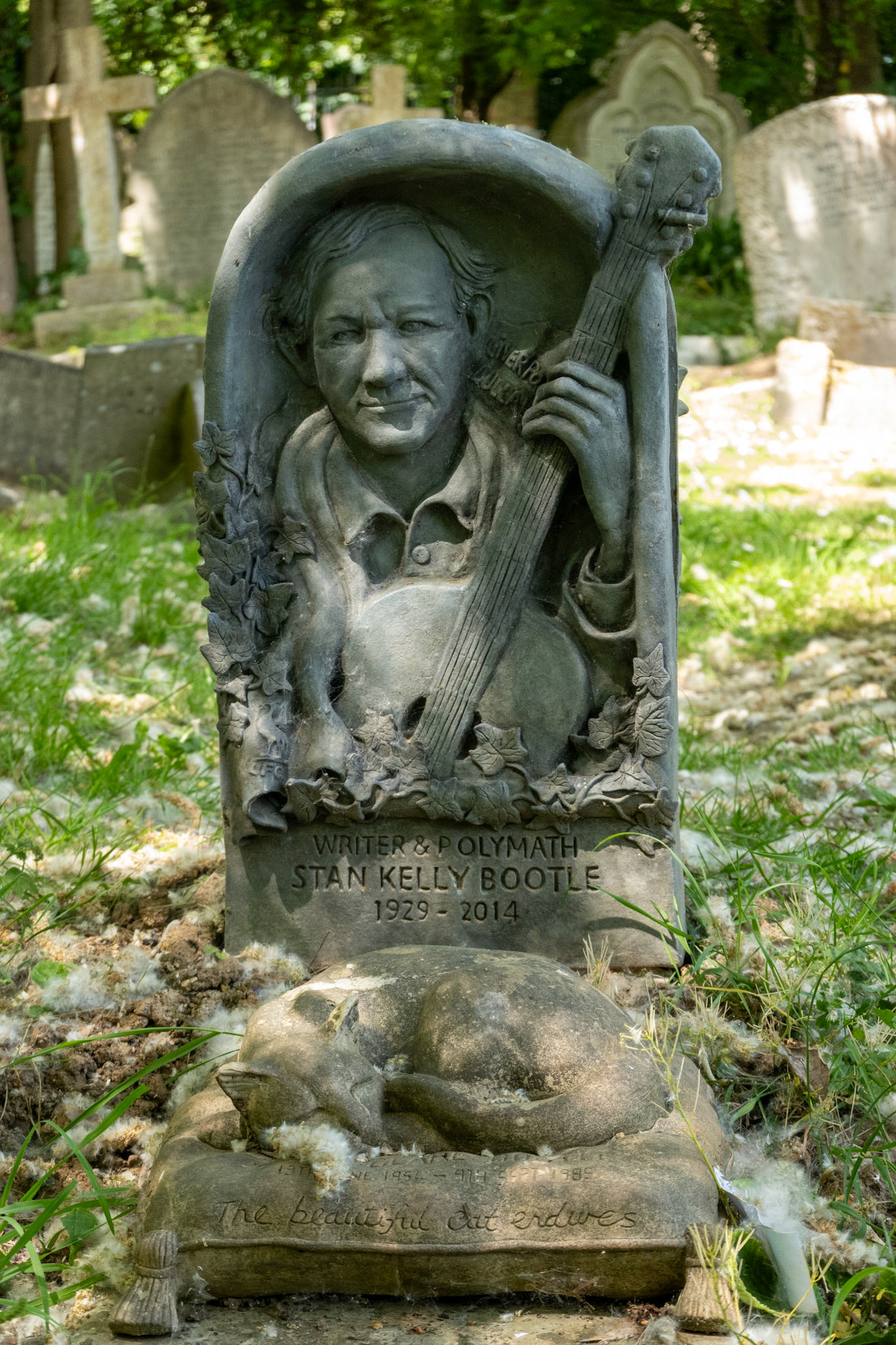
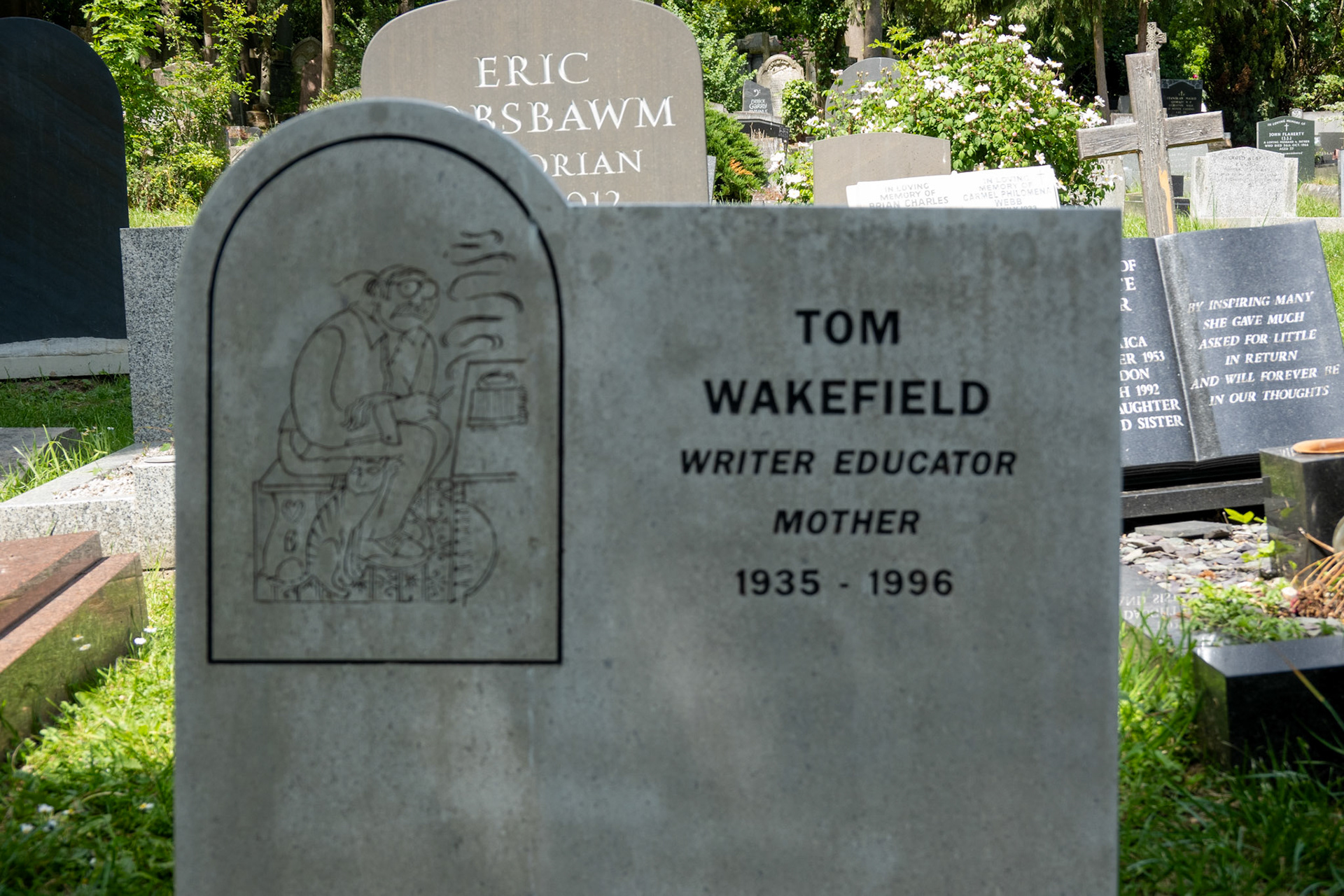
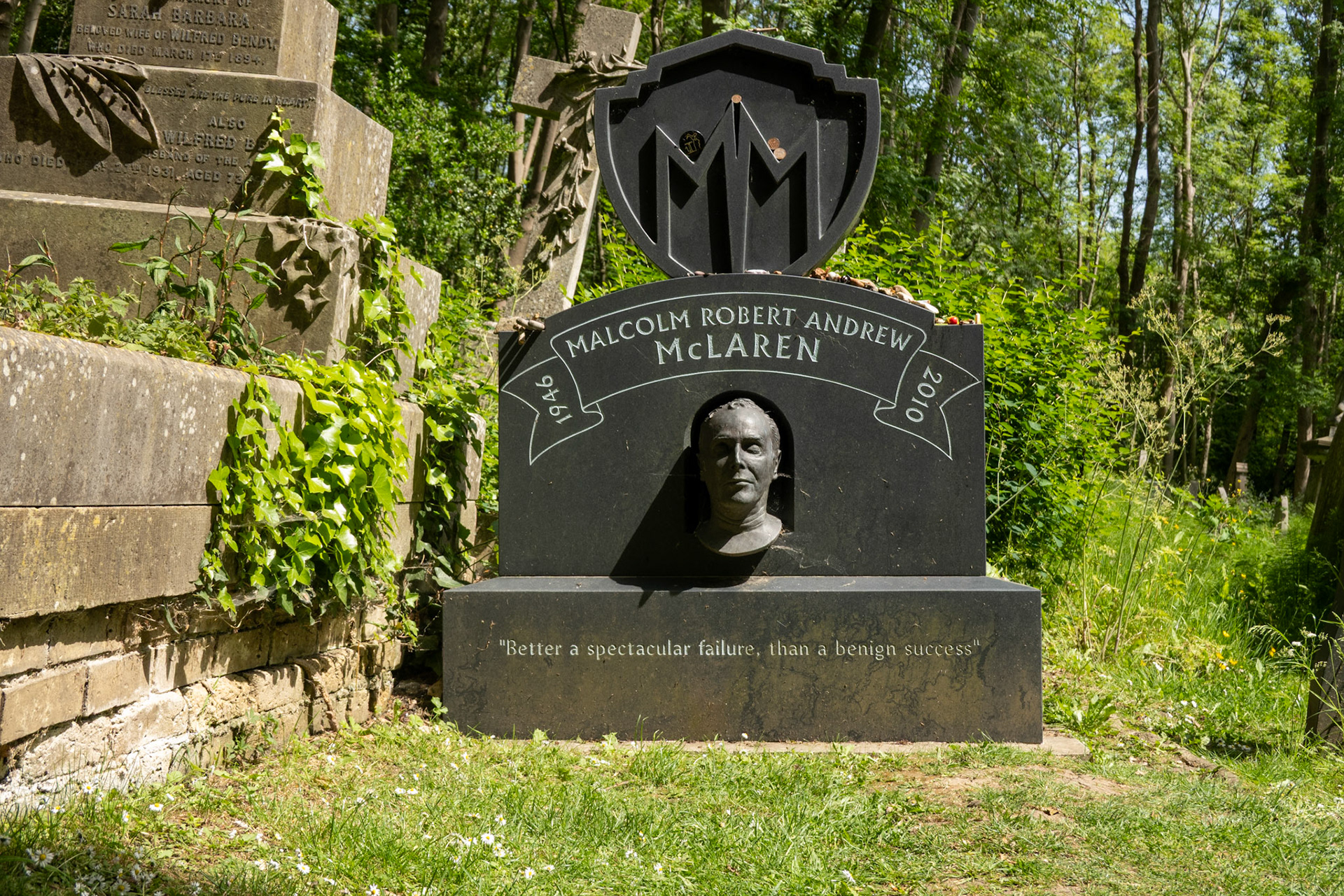
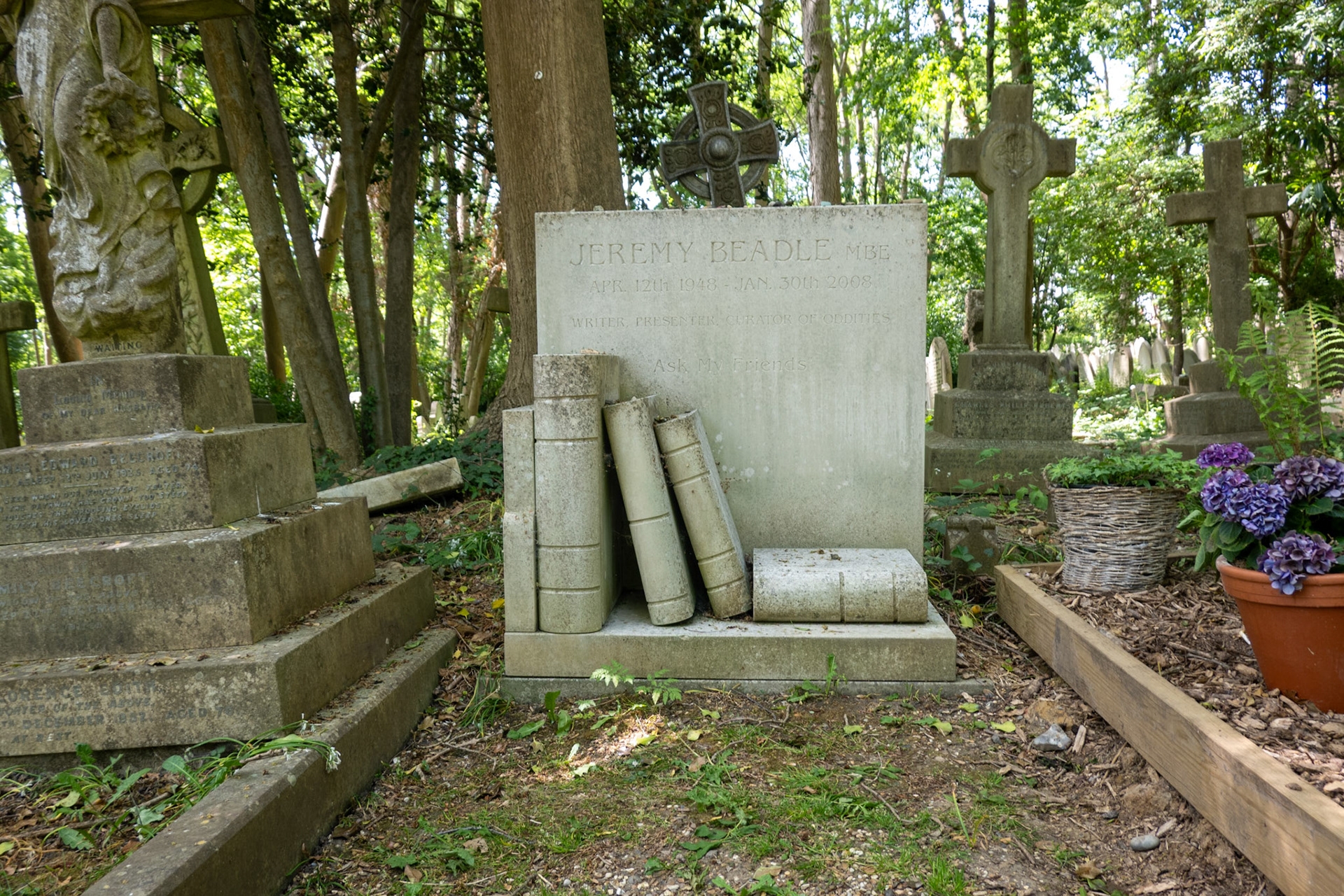
The most famous grave is that of Karl Marx, who can be recognized from a distance by his oversized head. Many people don’t know that the actual grave is located a short distance away, quite inconspicuous and hidden off the main path. Many other notable figures are buried here, such as Douglas Adams (“The Hitchhiker’s Guide to the Galaxy”), who is always supplied with a stock of ballpoint pens.