We’re on vacation in Andalusia and are visiting the city of Córdoba, among other places. Although it’s the provincial capital and has more than 300,000 residents, there seem to be only two cemeteries in the city. I manage to visit both and find that they’re very different and incredibly worth seeing.
Córdoba has an impressive history: In the 10th century, southern Spain was occupied by the Moors, and Córdoba was the seat of the Caliphate. With a population of 110,000 at the time—people of different faiths living peacefully together—it was considered one of the largest cities in the world. And although Moorish influence is still evident in the city’s architecture, the cemeteries reflect a purely Catholic influence.
The city’s patron saint is the Archangel Raphael, who can be seen throughout both cemeteries; the other cemetery is also named “San Rafael.” He is, of course, recognizable as an angel by his wings, and his distinctive attributes—a fish, a pilgrim’s staff, and a pilgrim’s flask or bag—are frequently depicted.
In Christian tradition, Raphael is considered the patron saint of the sick and of pharmacists. Since he accompanied Tobias (see the Book of Tobit in the Bible) on his journey, he has since been depicted as the patron saint of travelers, as well as sailors, emigrants, and pilgrims. In Tobit 6:8, Raphael points out to Tobias the healing power of the fish’s innards, which is why the fish is depicted.
He is also traditionally regarded as the patron saint of roofers and miners. Catholic blind people also venerate Rafael as their patron saint because of his role as Tobias’s guide.
While the women explore the Judería, my brother-in-law and I visit the cemetery with the melodious name “Cimitero Nuestra Señora de la Salud,” which roughly translates to “Cemetery of Our Lady of Health.”
While the women explore the Judería, my brother-in-law and I visit the cemetery with the melodious name “Cimitero Nuestra Señora de la Salud,” which roughly translates to “Cemetery of Our Lady of Health.”
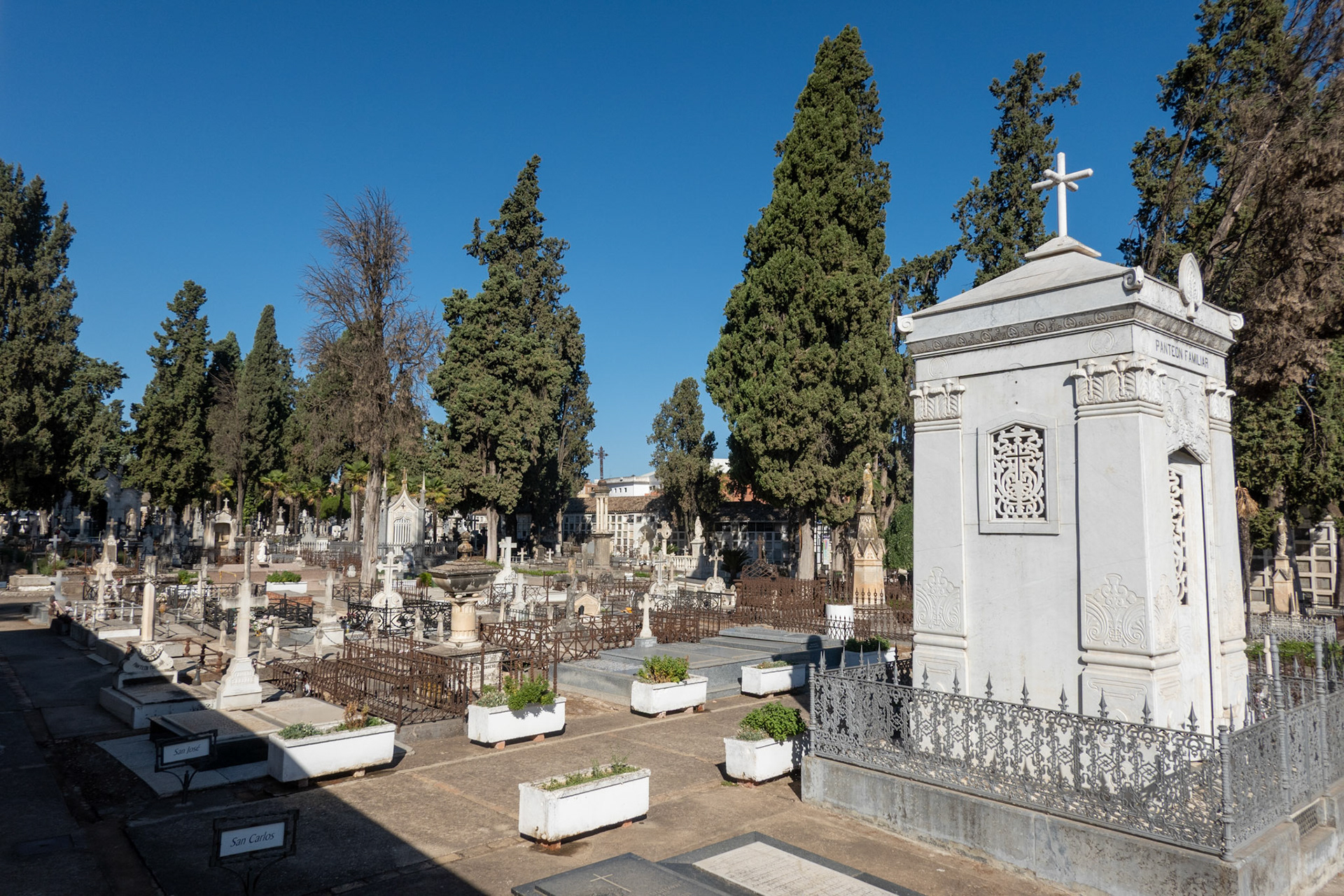
It’s 11 a.m. and it’s already over 30°C; there’s very little shade. Due to the climate, there are only a few potted plants in the cemetery—just a couple of palm trees and mostly yews, which don’t provide much shade.

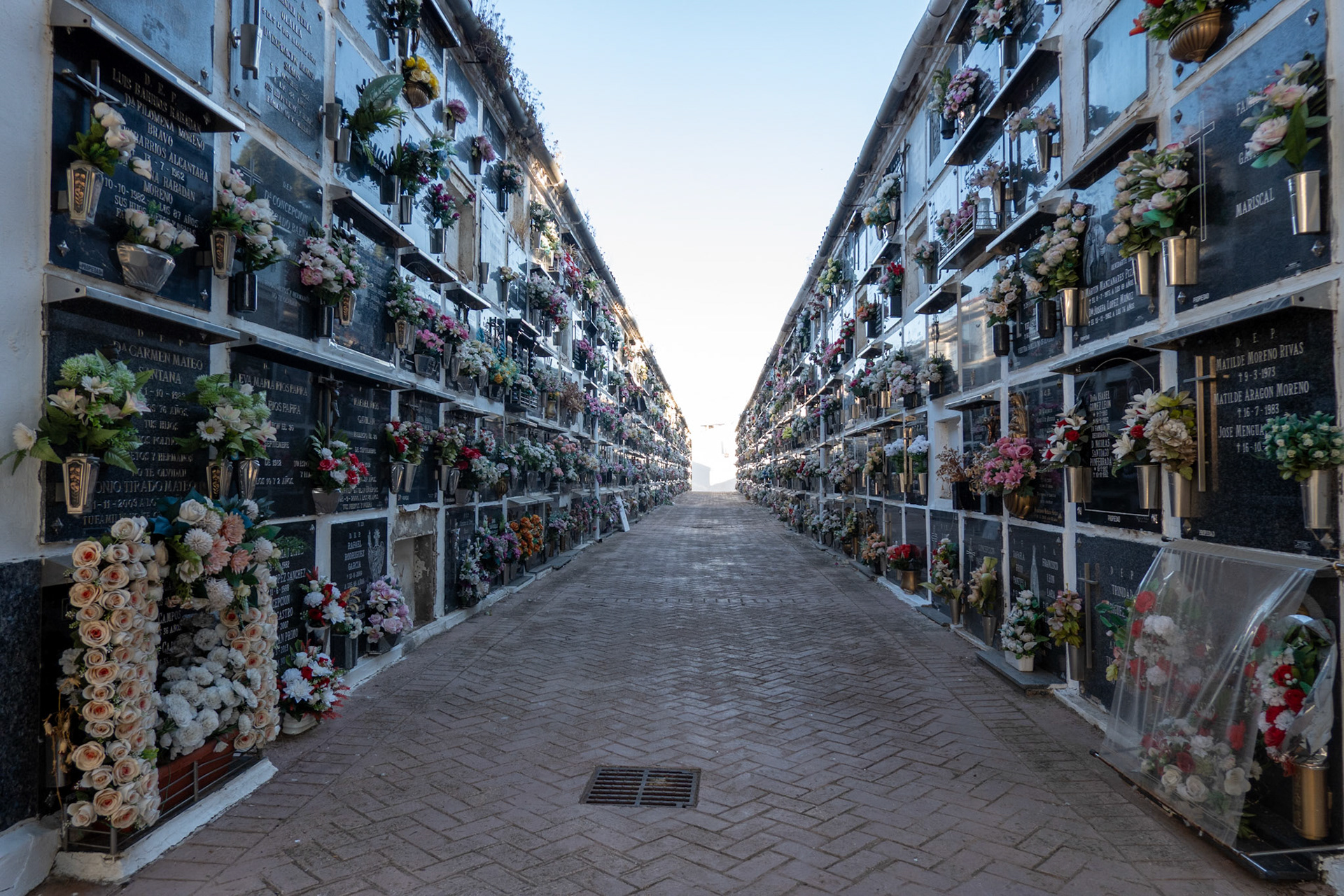
A typical feature of Spanish cemeteries are the so-called “nichos” or “nicheras,” or niche graves, where entire walls are lined with coffins stacked one above the other. The fronts are sealed with a marble or stone slab and feature the deceased’s name and dates of birth and death, a photo, flower vases, religious symbols, or small commemorative inscriptions. Unlike in Germany, plastic flowers are more common here.
This design is particularly widespread in densely populated regions because it requires less space than traditional in-ground graves. The cemetery is truly diverse and impressive; you can often tell from the cemeteries whether a city was prosperous in the past, as evidenced by the mausoleums, ornate tombs, and statues, among other things.
Many old graves, where the burial period has expired, are unfortunately in disrepair, while others are beautifully maintained. Of course, there are many statues and images of angels, Jesus, and Mary. In one of the rows of graves—all named after saints—I see a parasol under which a stonemason is carving an inscription on a Sunday in over 30°C heat. I don’t want to disturb him, so I walk past him slowly, taking a brief, curious look at his work. He looks up, smiles, and says, “¿Hola, como eta?” (Andalusian for “¿Hola, como estás?”—Hello, how are you?). We strike up a conversation, though my Spanish is at an “advanced beginner” level and the Andalusians tend to drop a lot of letters. Still, I understand him quite well. He asks what I’m doing here, how I like Córdoba, and what I’ve already seen.
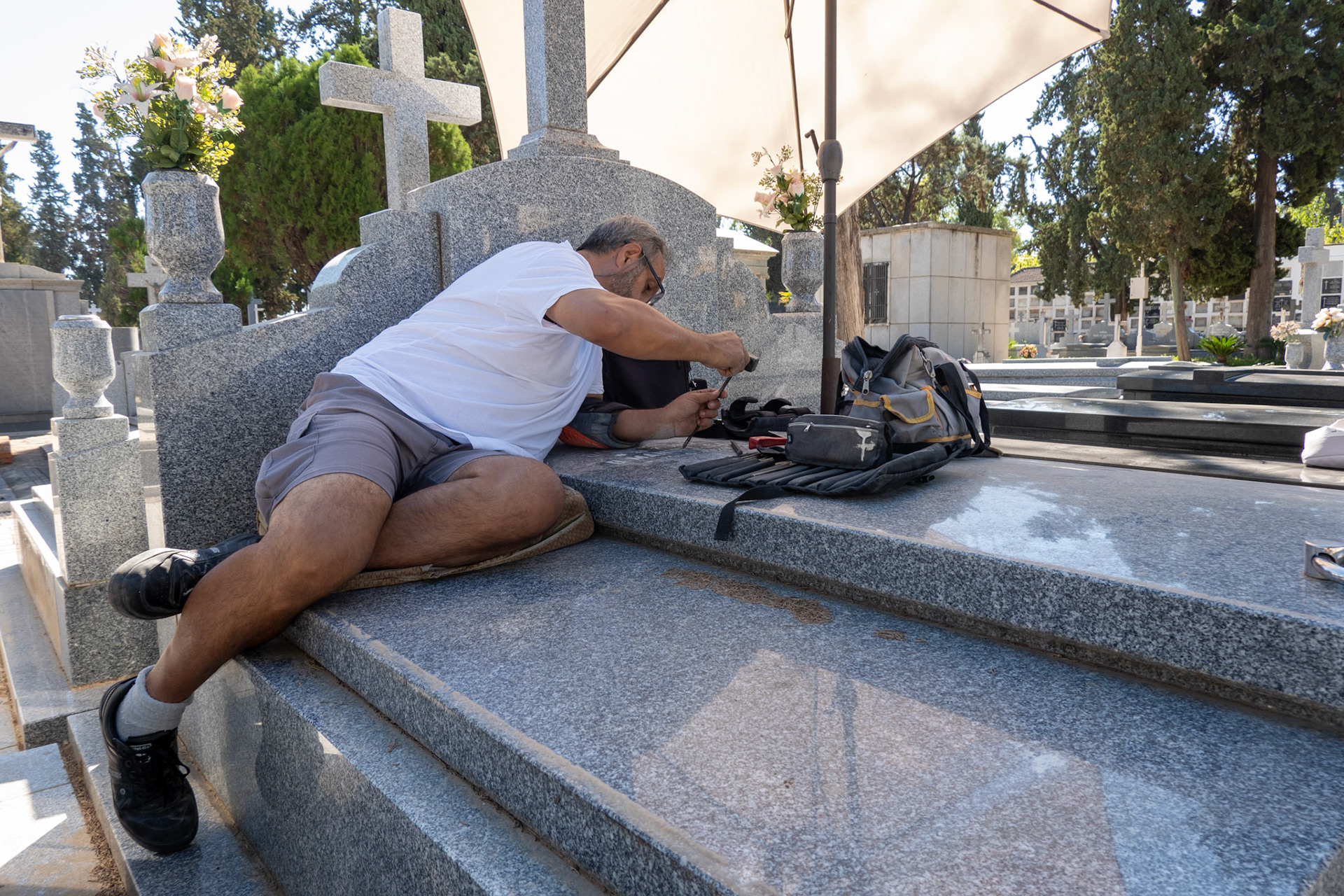
After a few minutes, he pauses and asks if I even understand him. I say yes, and my answers seem to make sense overall, so he cheerfully continues talking. I have so many questions for him, but I’m reaching my limits with the language. Finally, I ask him if I can take a photo of his work, and he agrees with a smile. The only thing that’s important to him is that the name of the deceased isn’t visible, which I respect, of course. He asks for my name and then, with a bow, says, “¡Soy Miguel, me ha encantado!” (I’m Miguel, it’s been a pleasure). I walk on, happy to have had another wonderful experience at the cemetery.