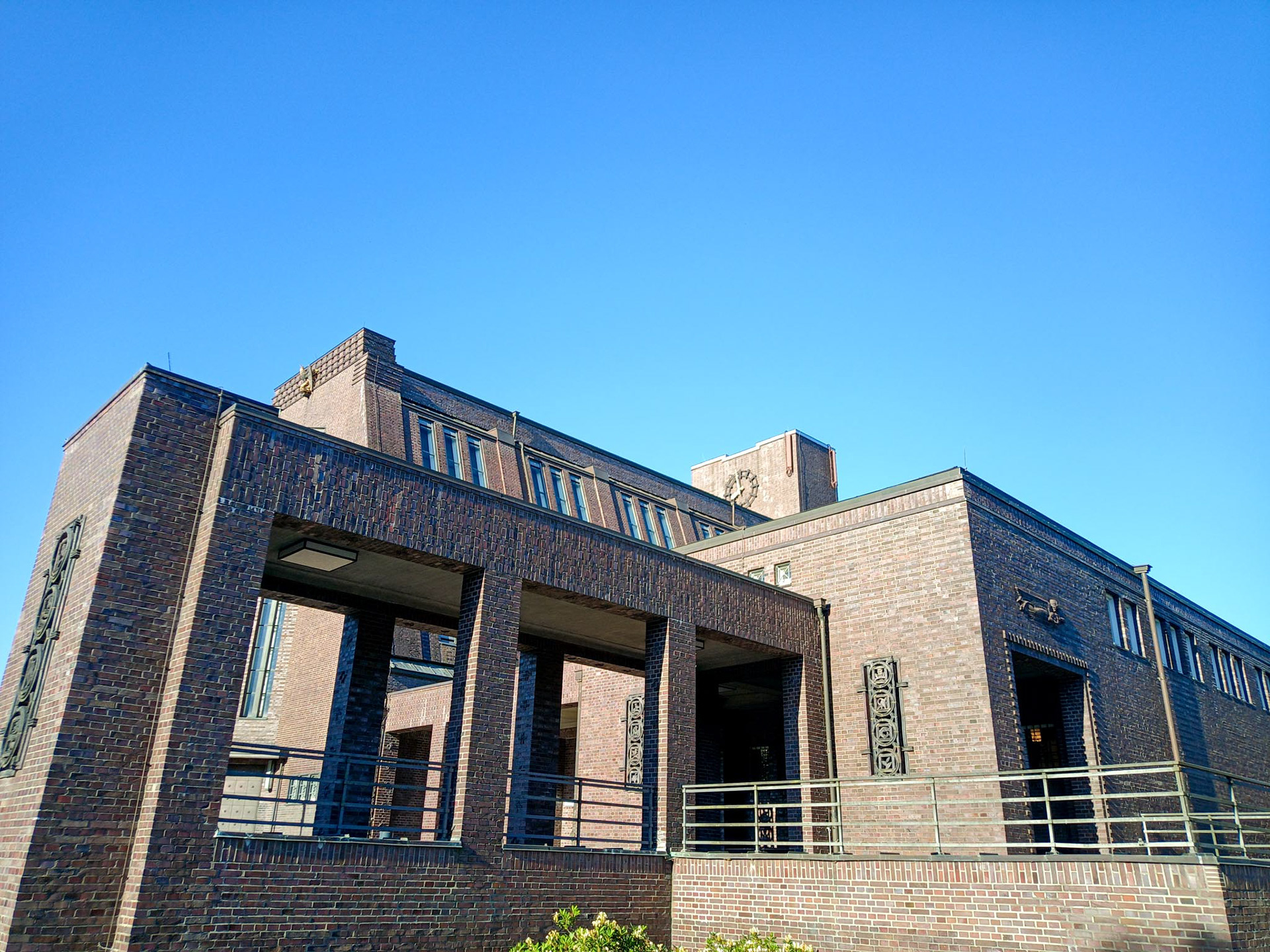
To get to the memorial site at the Ohlsdorf Cemetery in Hamburg (Germany), you start at the main entrance, turn left, and walk straight ahead along Talstraße. Pass the Fritz-Schuhmacherhalle (on the left) and see the massive memorial to the victims of Nazi persecution on the right.




If you continue on, you’ll come to the "Quiet Path" in the northwest corner of the cemetery, which winds through the grounds for about 1 km. It is often described as the most beautiful path in the cemetery, with plenty to see along the way.
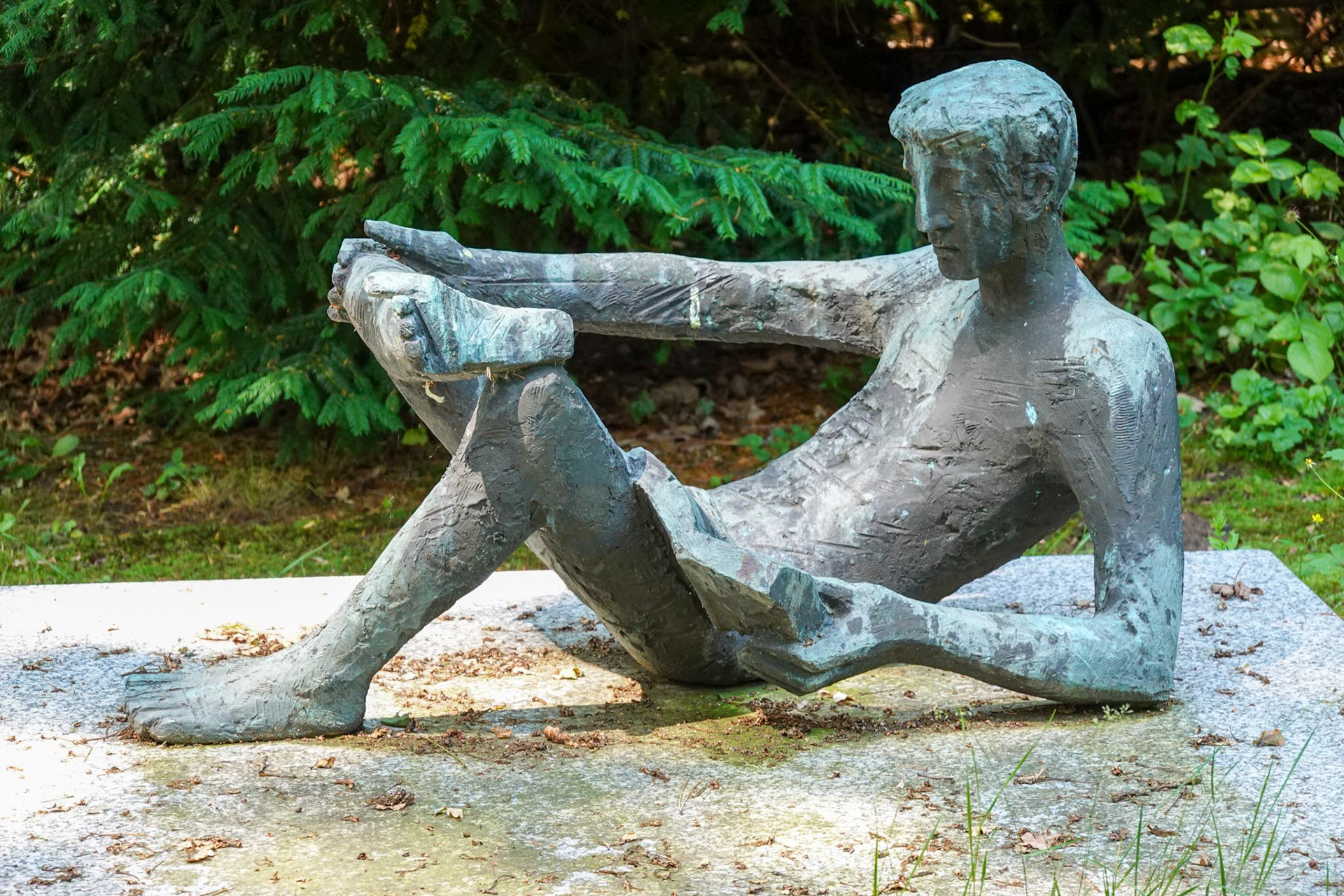
After a few meters, the “Reading Youth” statue greets you at the grave of writer Kurt W. Marek, located at the beginning of the “Poets’ Corner.” Several authors, actors, and prominent figures known in Hamburg are buried here.
After about 10 meters, across the way stands the beautiful tomb by sculptor Oscar E. Ulmer, “Mother and Child,” and nearby is a white marble monument modeled after an embryo. It is a memorial site for unburied children, featuring a bench in front where visitors can linger; it was dedicated in September 1999.
“A white-blooming spring tree and a bridge over a sadly dried-up stream, symbols of hope and transition, frame the space. The train that passes by relatively frequently nearby can be interpreted as a sign of ‘returning to life,’ as one mother once put it. Sunbeams can shine through the surrounding trees at all times of the day.”
Whenever I walk past this spot, I always have to pause for a moment and reflect on the information provided by the Förderkreis Ohlsdorfer Friedhof e.V., which describes the origins and background of the memorial. The initiative was launched by author Susann Schniering, who, following a miscarriage in the 26th week, decided against a burial—which, under the legal requirements at the time, would have been mandatory only for a body weight of 1,000 grams or more.
She later regretted that decision. It became clear how important it can be to have a place where one can grieve and say goodbye. Nor should the ritual of “closing the chapter”—that is, “laying the body to rest”—be underestimated.