I’m visiting Andreas in Kiel; he’s showing me around his city and also knows about my hobby. So in the morning we visit the beautiful Südfriedhof, and in the afternoon the Nordfriedhof. The latter is close to where he lives, so we walk there. On the way, we pass many “Storks”—fans of Holstein Kiel, who unfortunately lost 2–3 to Nuremberg today. The Holstein Stadium is right next to the cemetery, and the fans walk past the main entrance; some even take the opportunity to visit the cemetery.

I usually start by taking a photo of the main entrance, but today I have to postpone that because there are soccer fans everywhere. So we go inside first to get our bearings. I only did a quick bit of research beforehand and want to see a specific grave; the cemetery is dominated by soldiers’ graves, since Kiel was, of course, a major naval base during World War I and World War II.
Behind the main entrance, there’s often an administration building and/or a funeral hall or chapel—often both in one. That’s the case here, too. A gravestone with the inscription “Office” points to the administrative section—exactly my kind of humor.
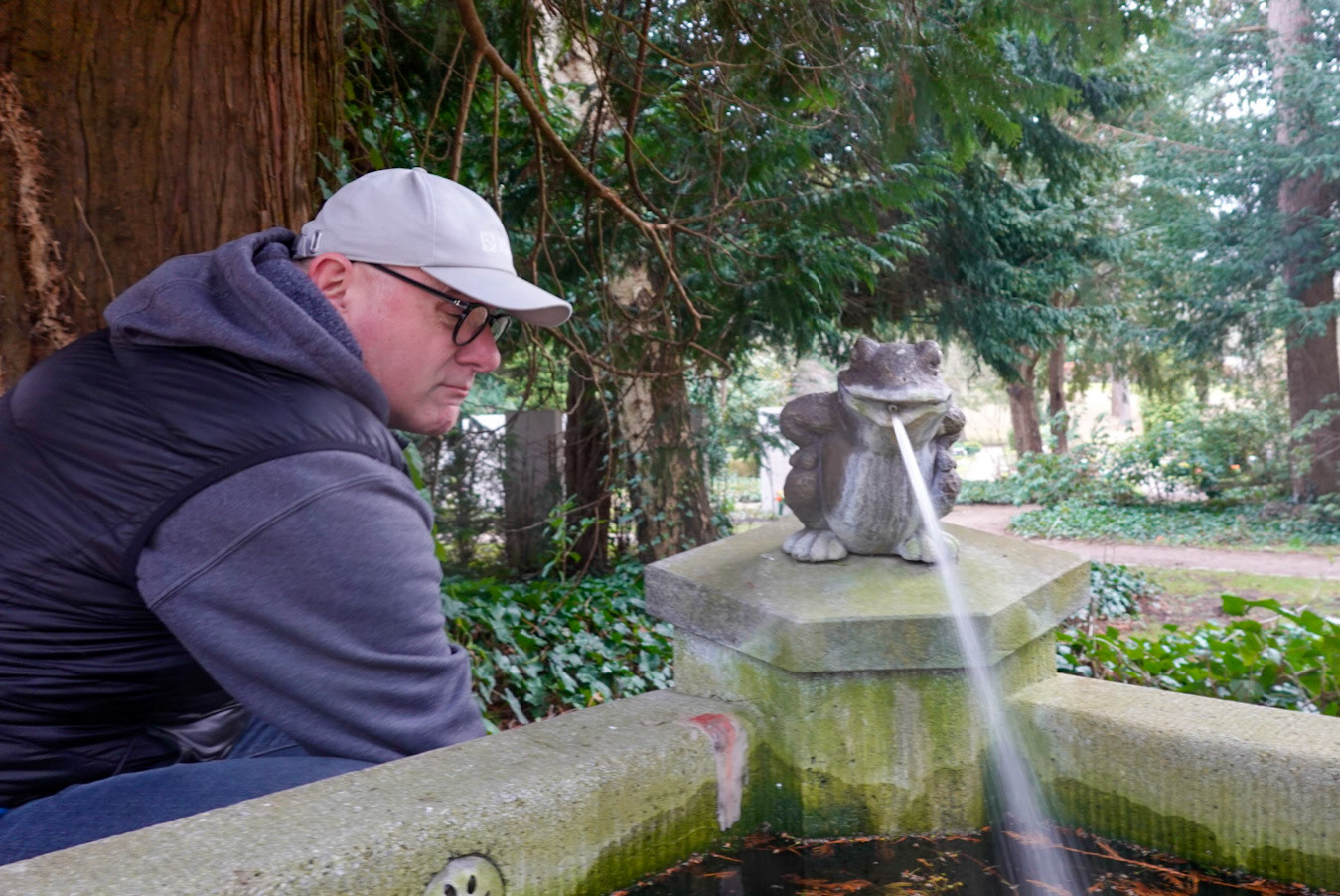
On the other side is the entrance to the funeral hall, with a small fountain in front of it, on the edge of which sits a frog. I say out loud that it would be nice if the frog would spit water—that’s obviously what it’s meant to do.
I take a few photos, and since A. clearly agrees with me, he finds a valve on the back of the fountain, which he boldly opens—and immediately a jet of water shoots out of the frog’s mouth into the fountain, as well as onto me and my camera.
We laugh; I dry off the camera, and A. adjusts the jet so I can take a nice photo.
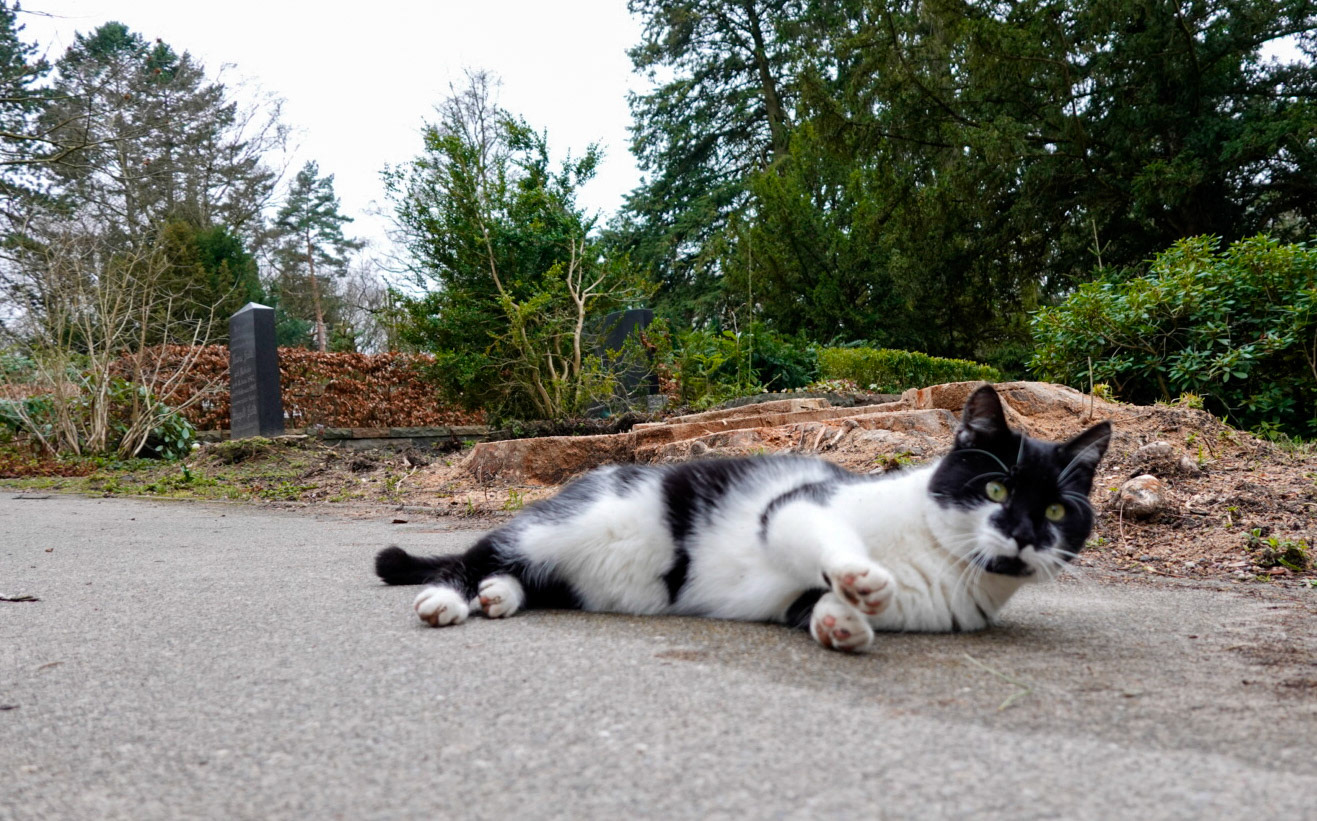
We continue on our way, looking for Jutta Kutter’s grave—my main goal for today. I have a rough idea of where it is, and we walk up a hill. On the way, I have to pause briefly because the cemetery cat wants to be noticed and petted thoroughly.
Once we reach the hill, the grave marker is easily spotted by the side of the path, and somehow it doesn’t really seem to fit in here. I wonder if there’s a story or background to it.
There is a tragic story behind it:
Jutta was the daughter of the famous captain and later rear admiral William Kutter; she choked to death on a piece of candy at the age of 1½. Her parents were not at home, and the nanny had tried to calm her down with sweets.
The tomb was created by the renowned sculptor Hans Dammann, who used the painting “Sleep” by the French painter Francine Charderon as a model. Both the painting and the tomb are beautiful and fitting for this tragedy. Flowers have been laid on the grave ever since and continue to be placed there to this day.
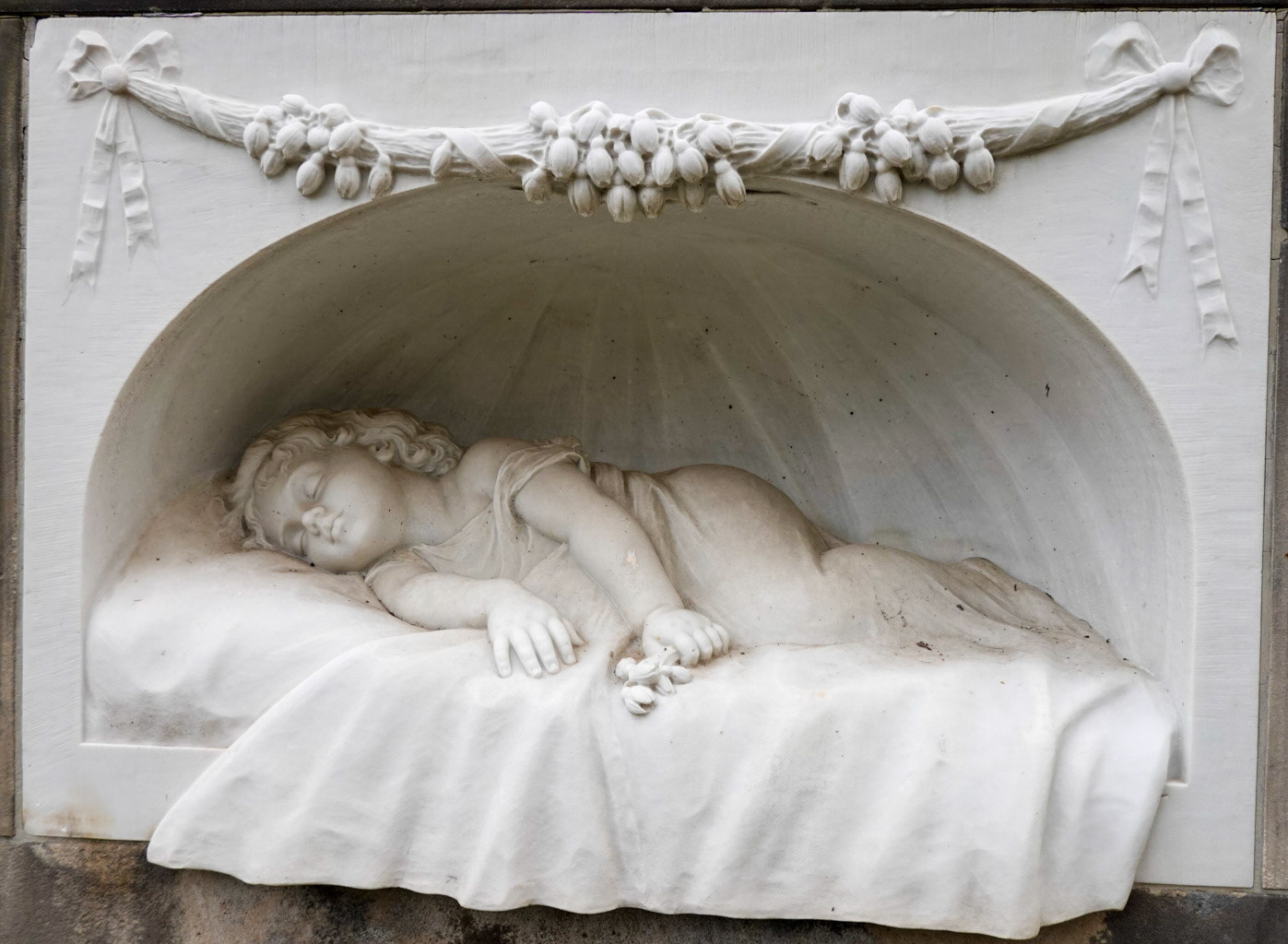

An elderly woman donated funds to have the tombstone cleaned, so it can now be admired in all its splendor. As a little girl, her mother had told her the cautionary tale of Jutta Kutter and the candy, and she used to lay flowers there with her as well.